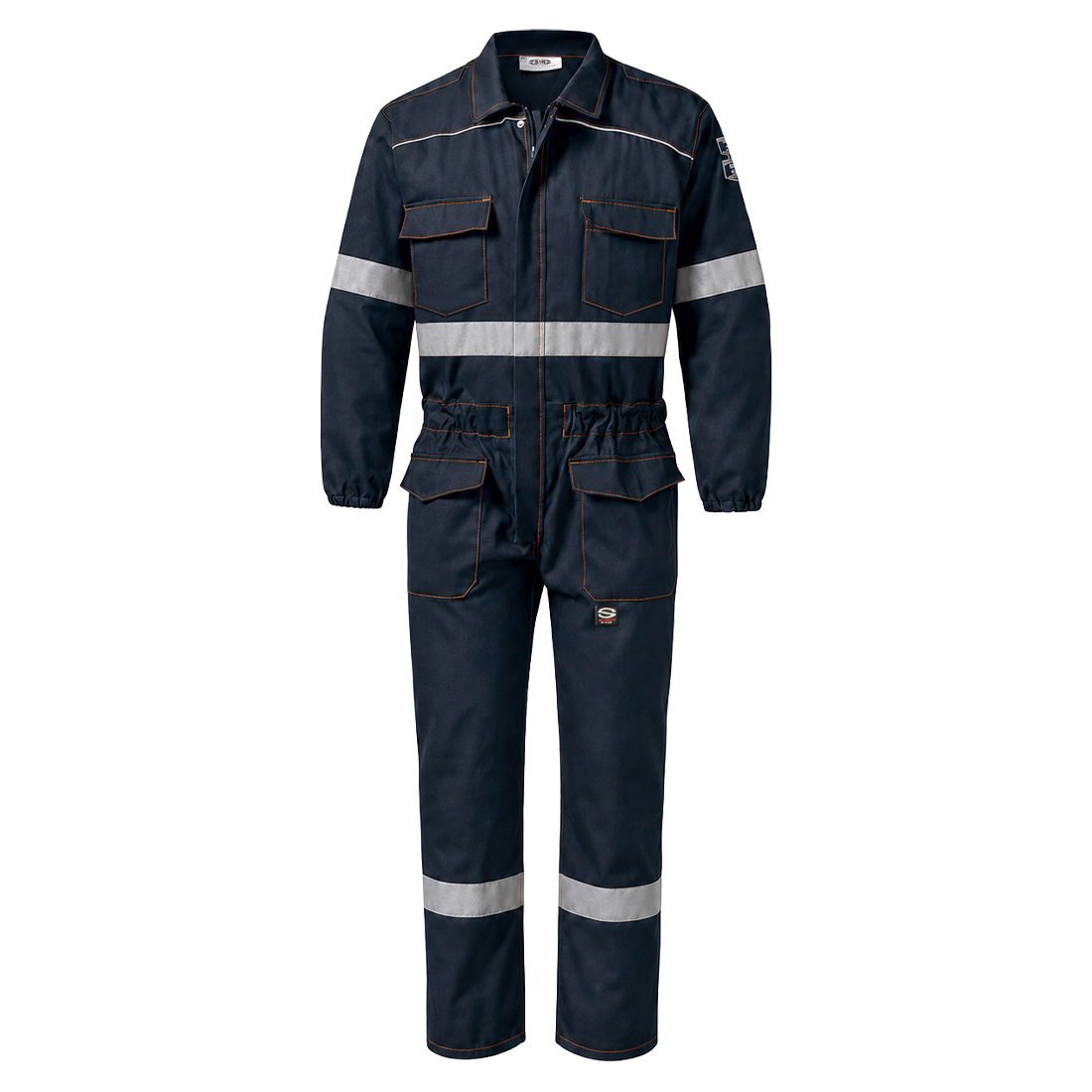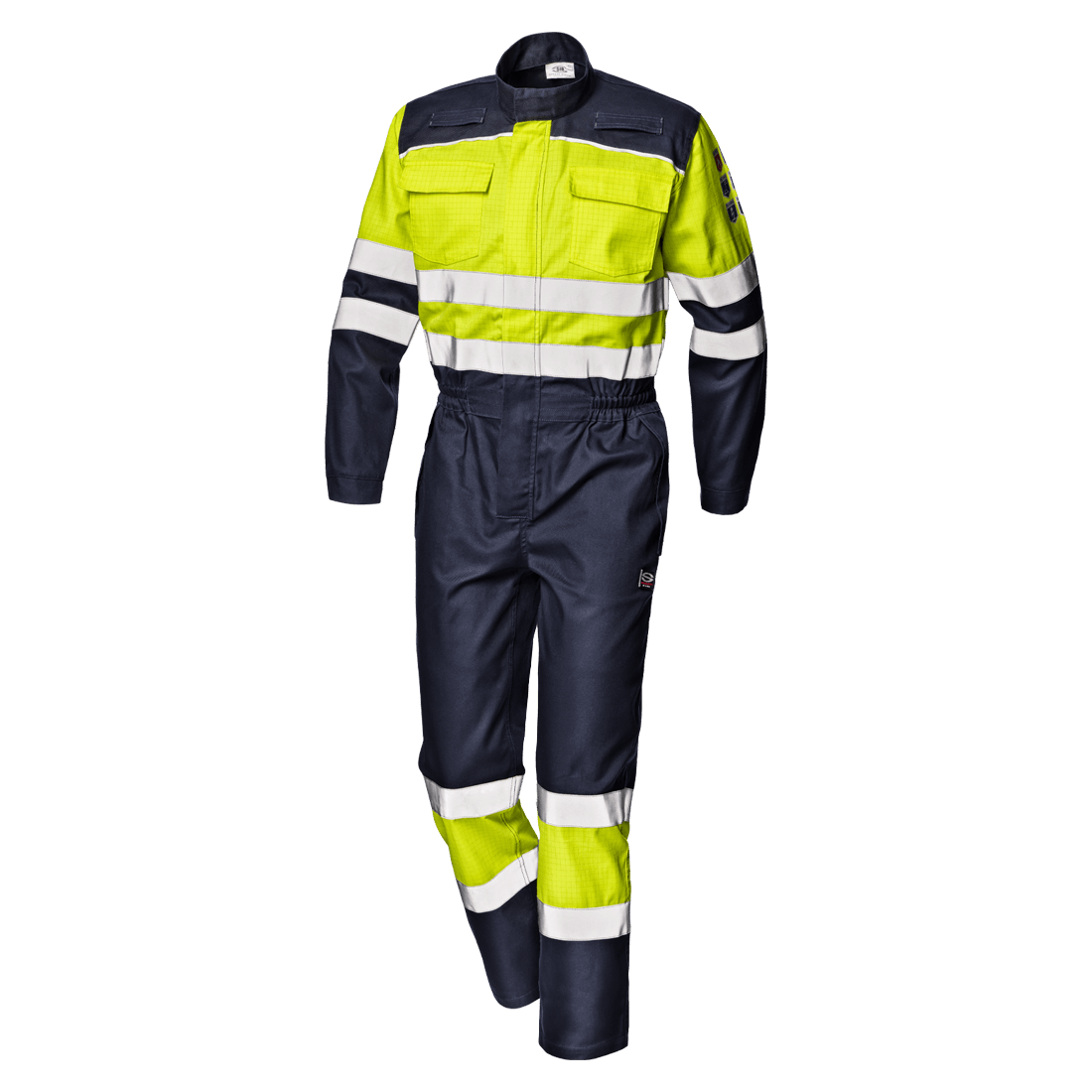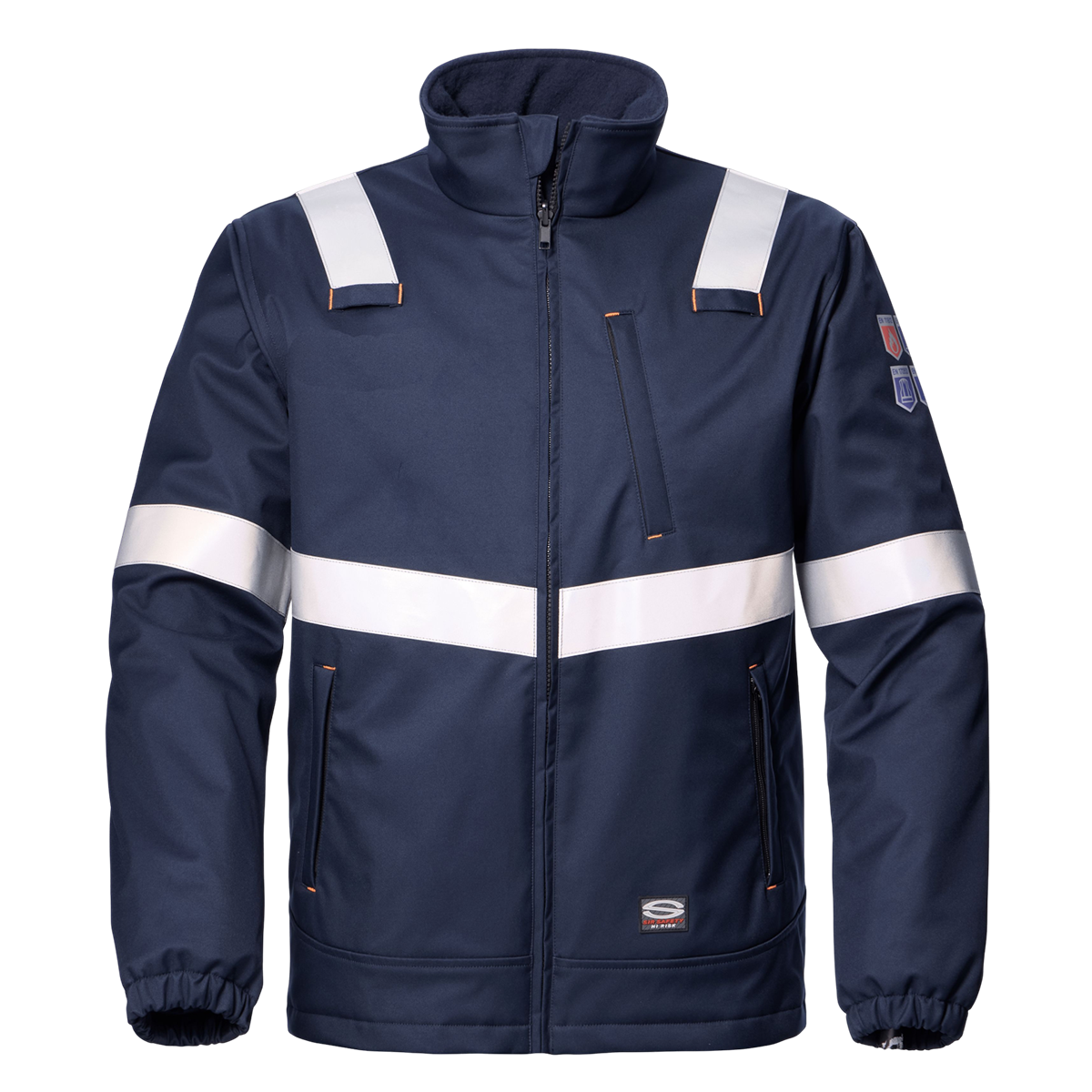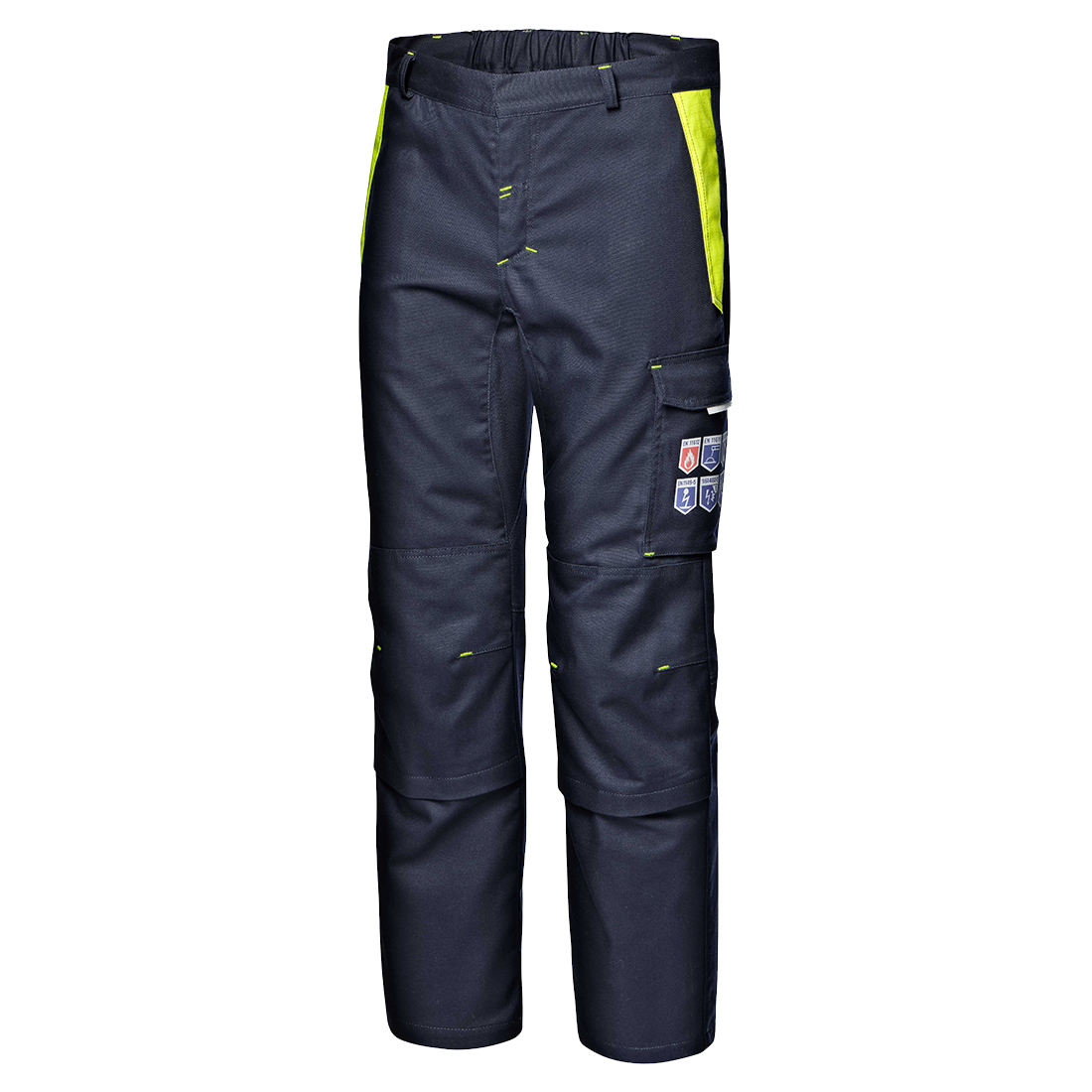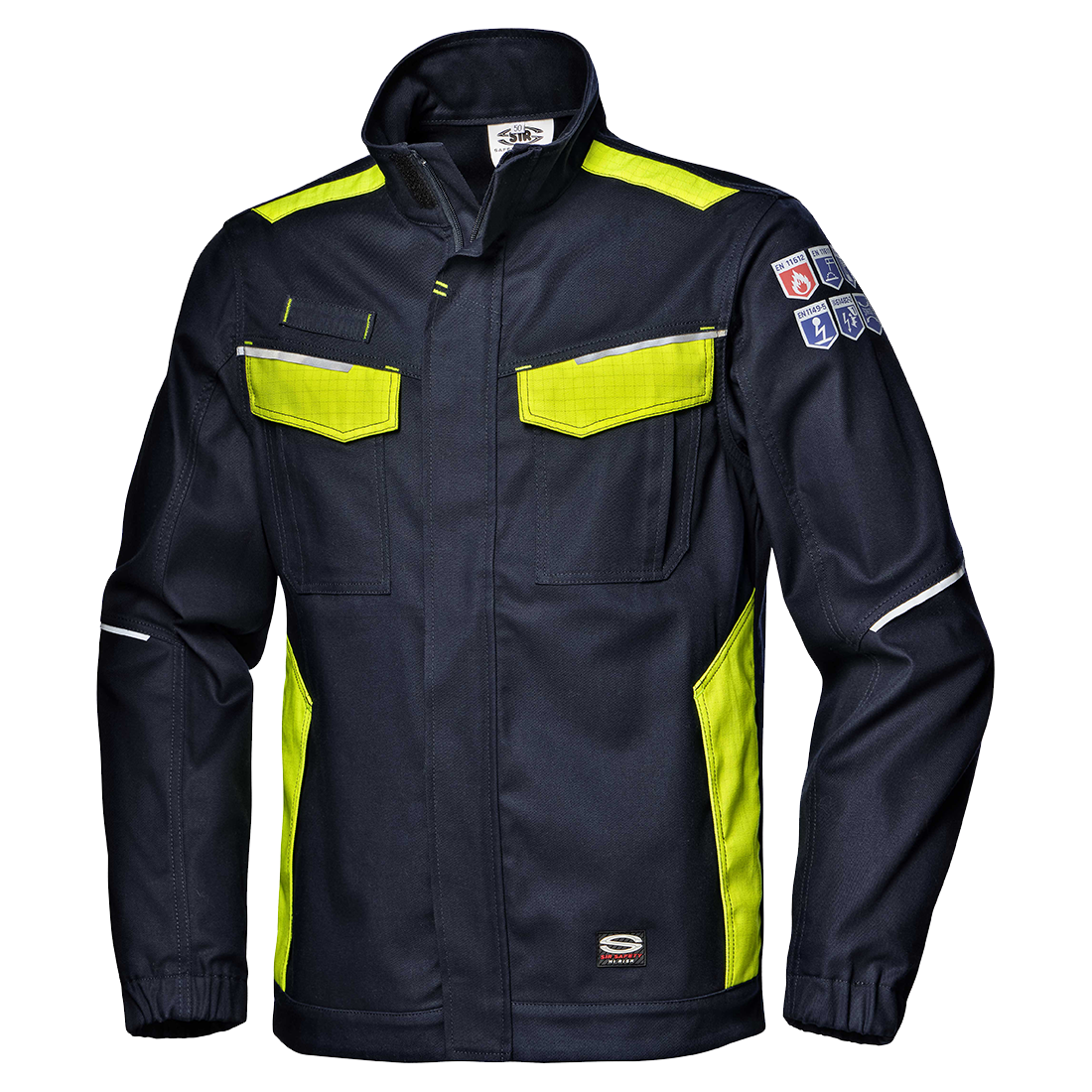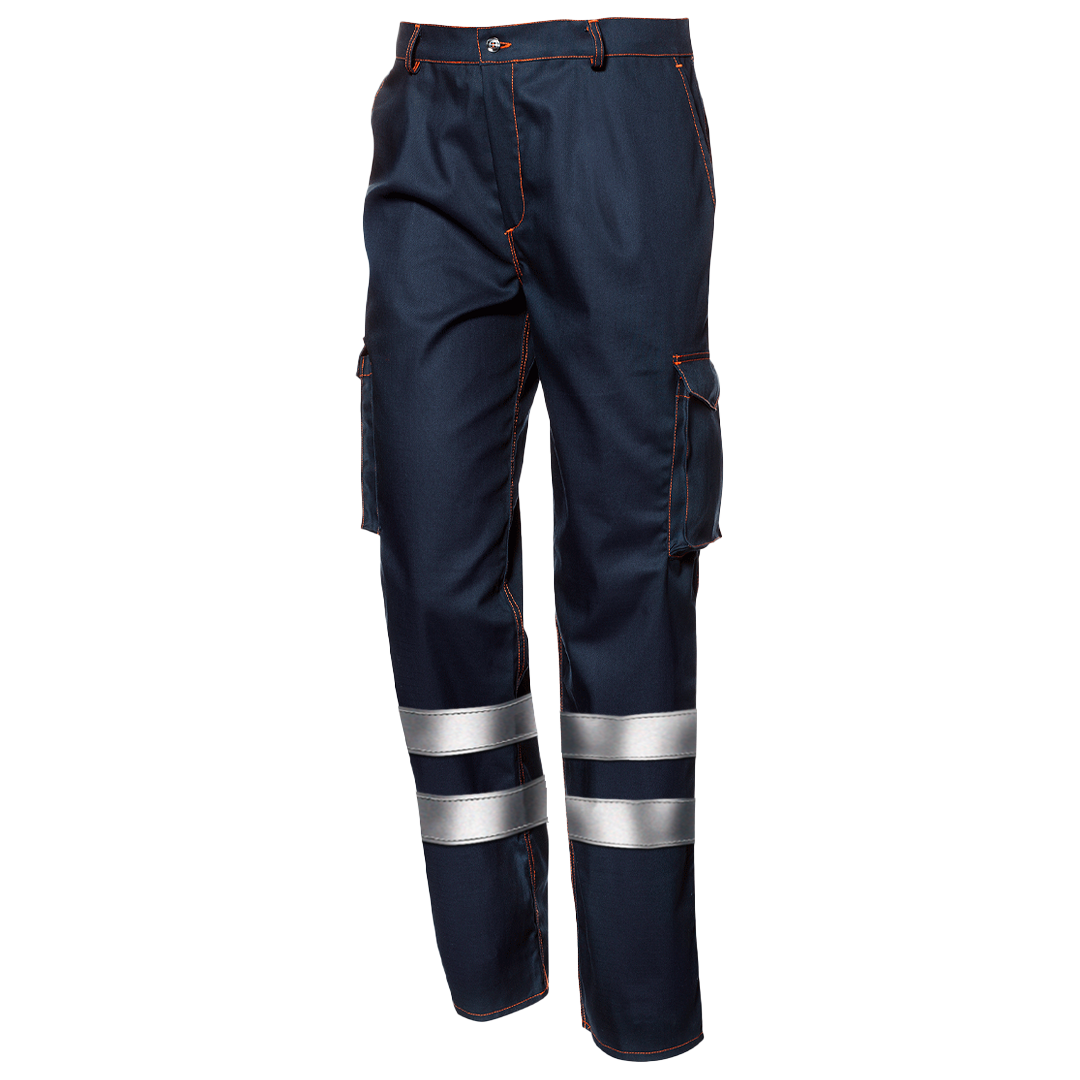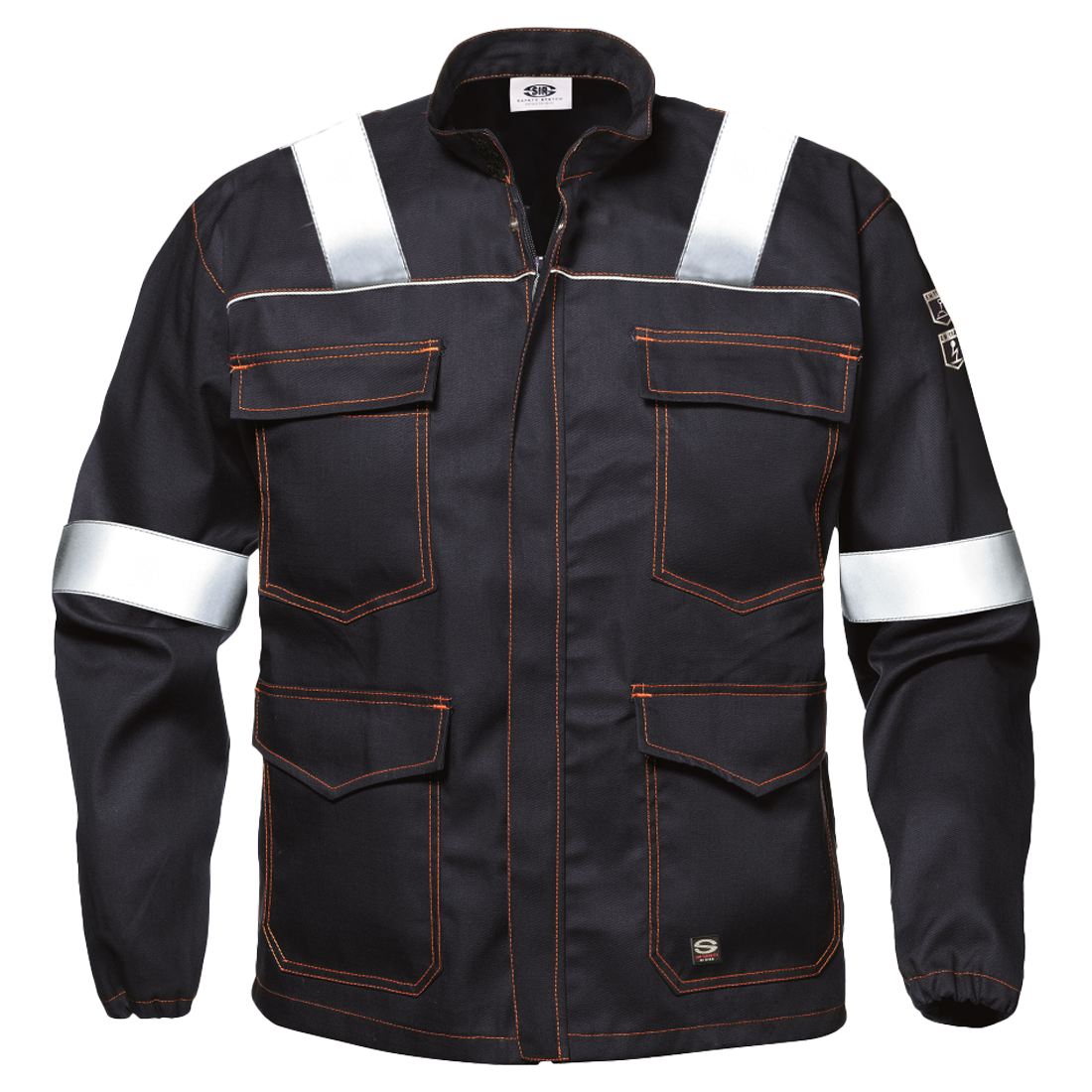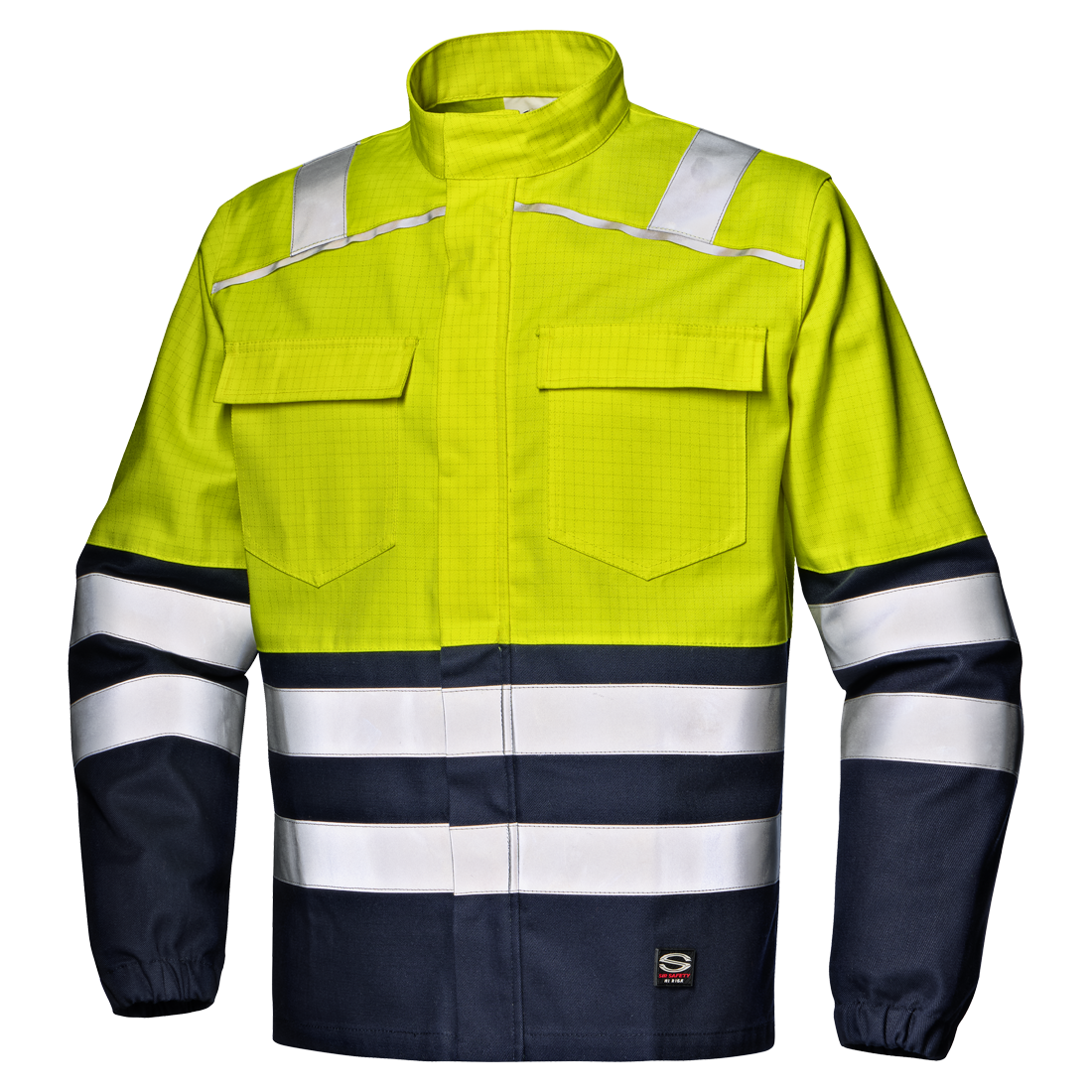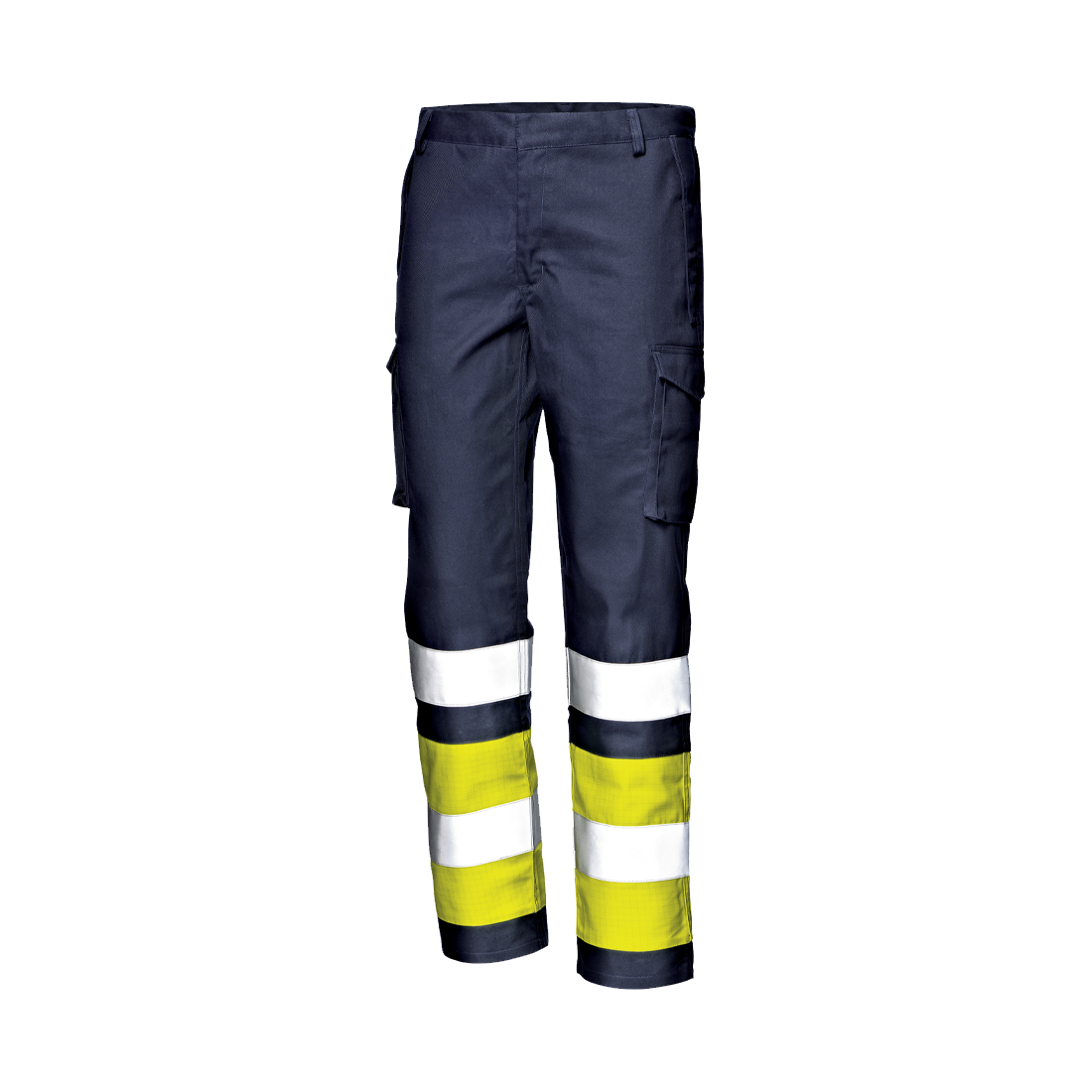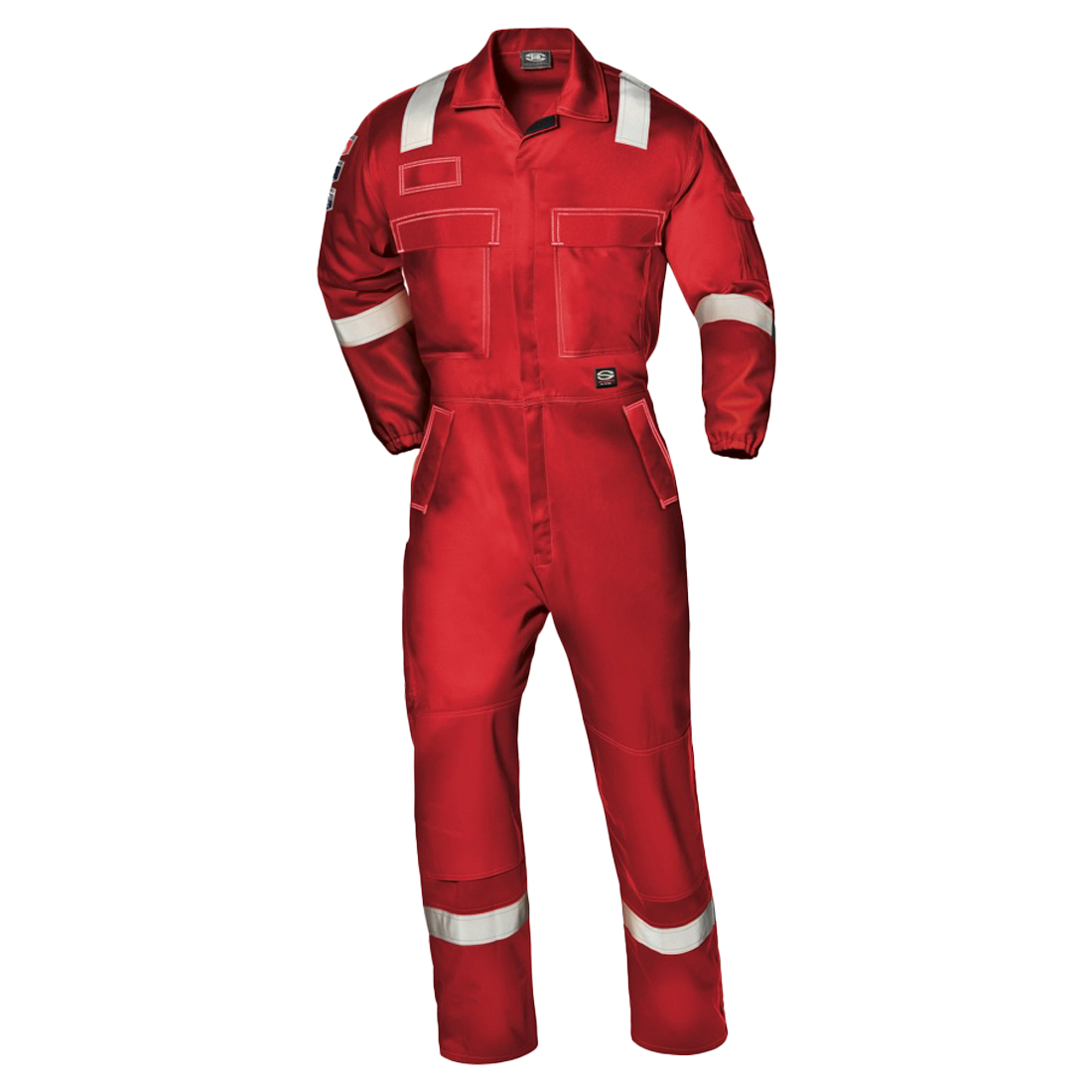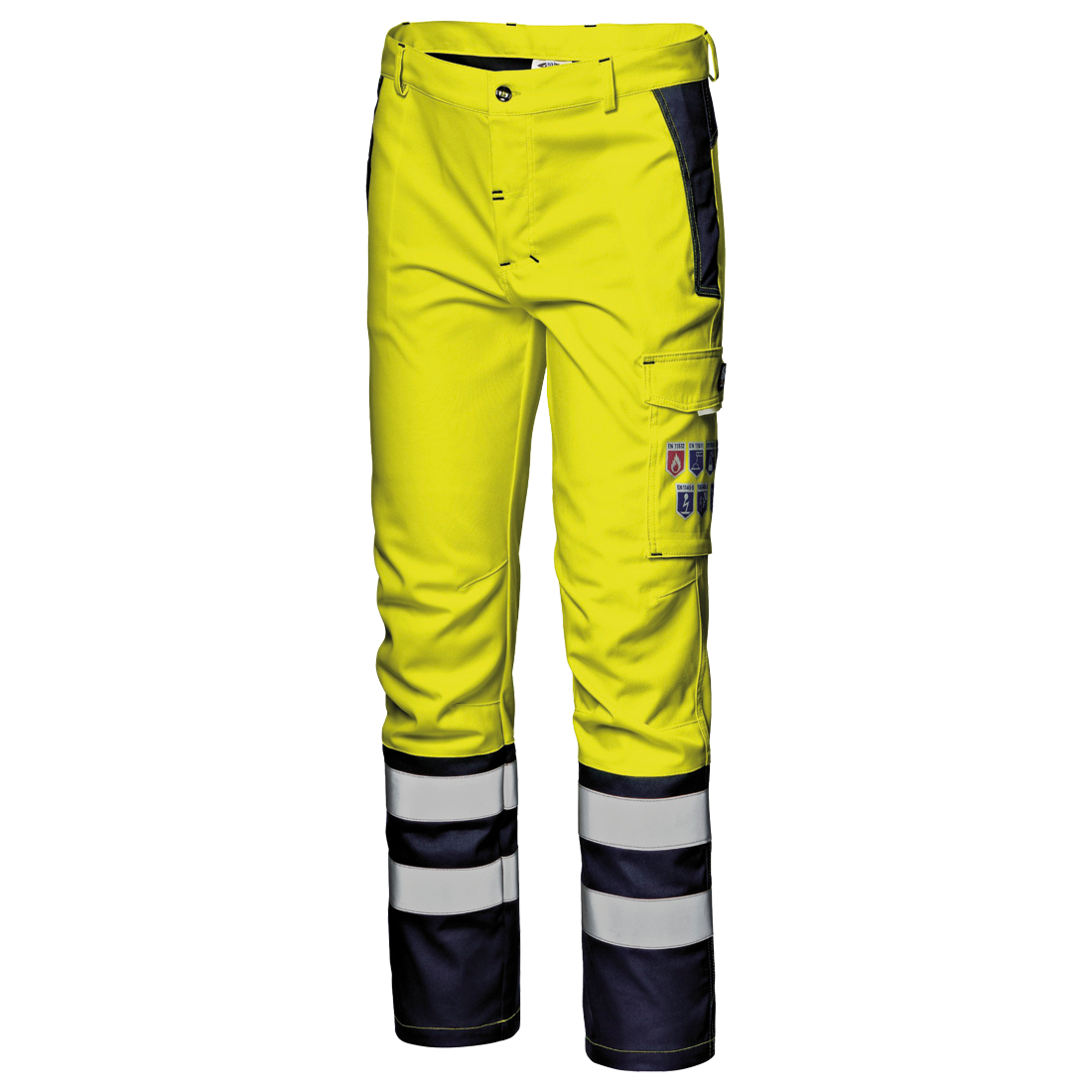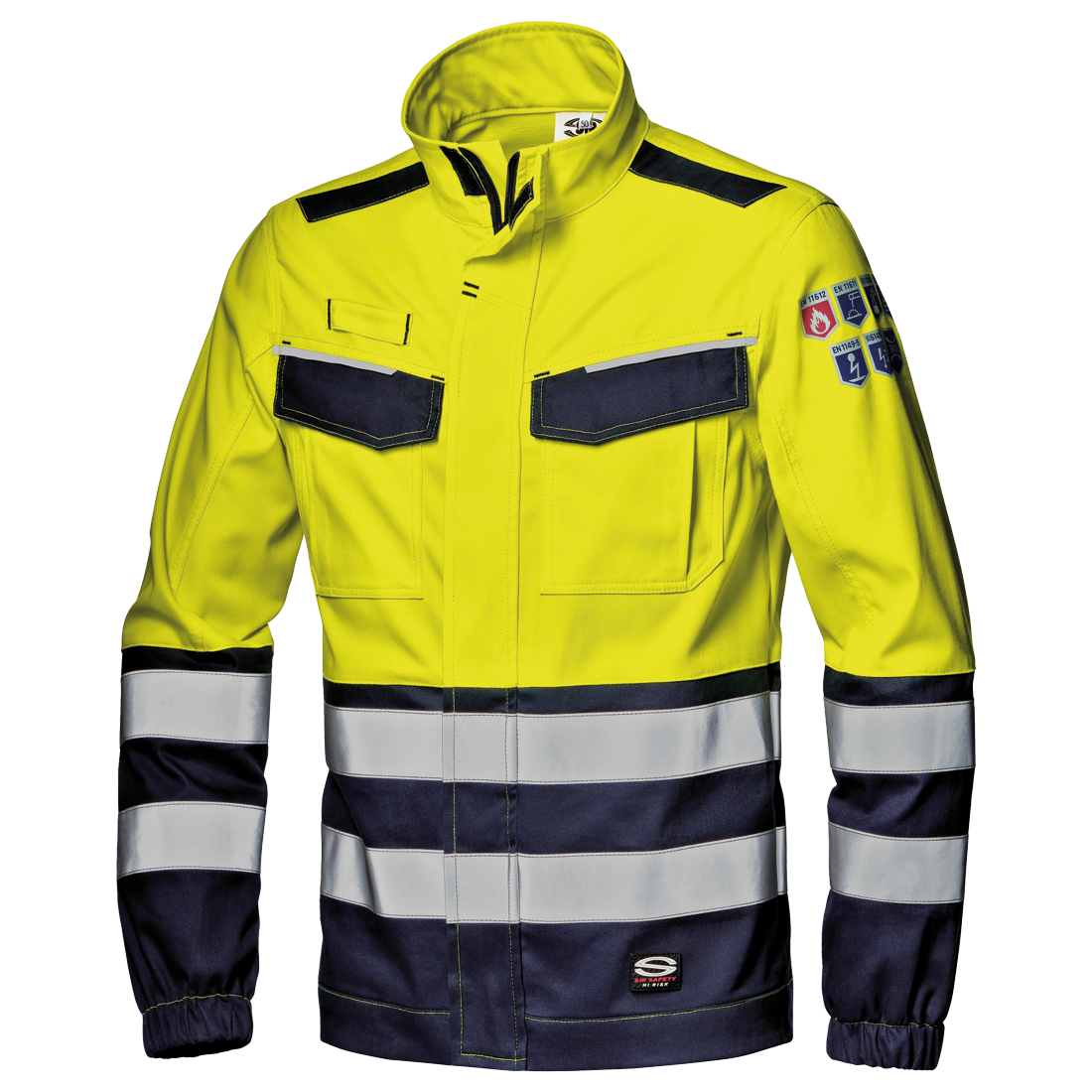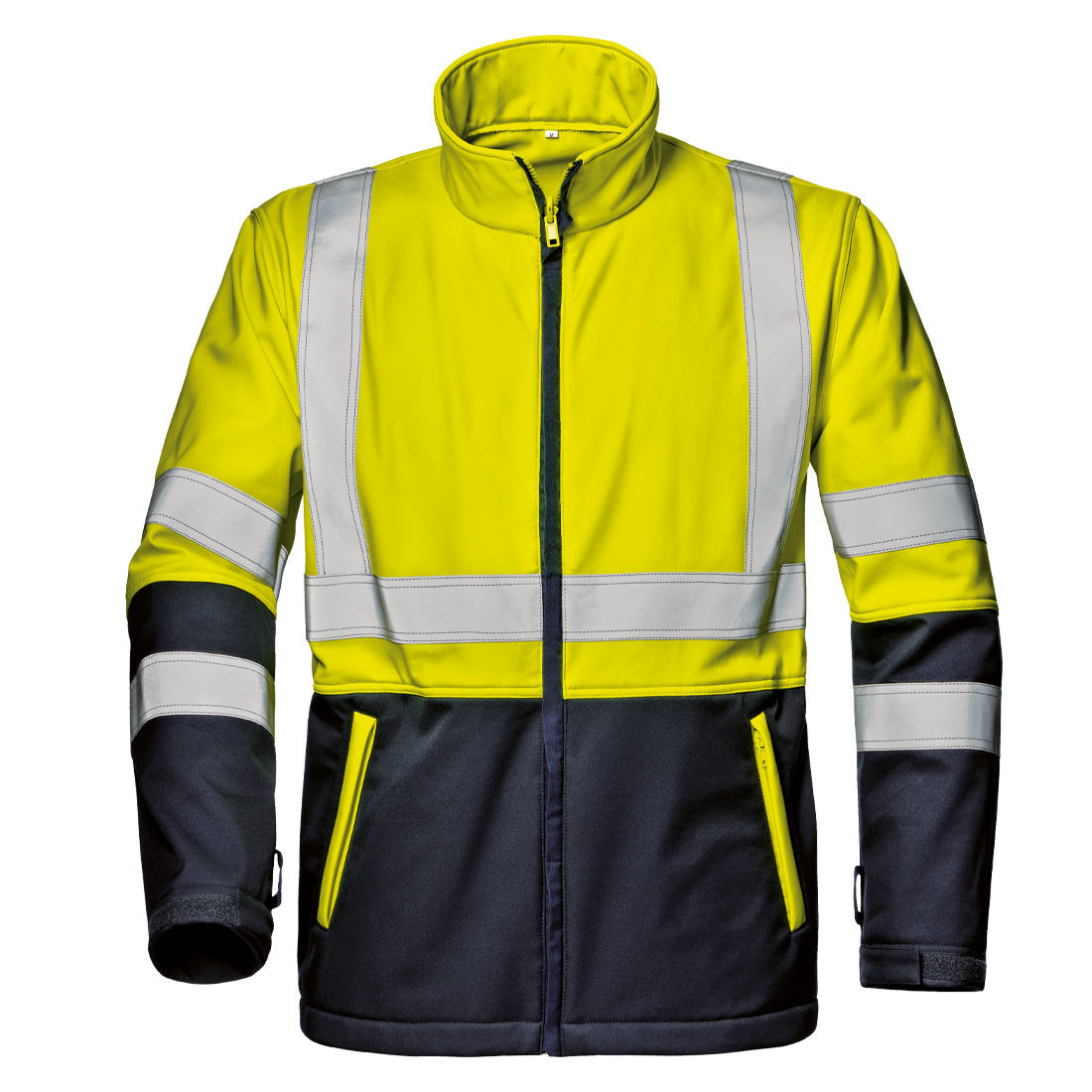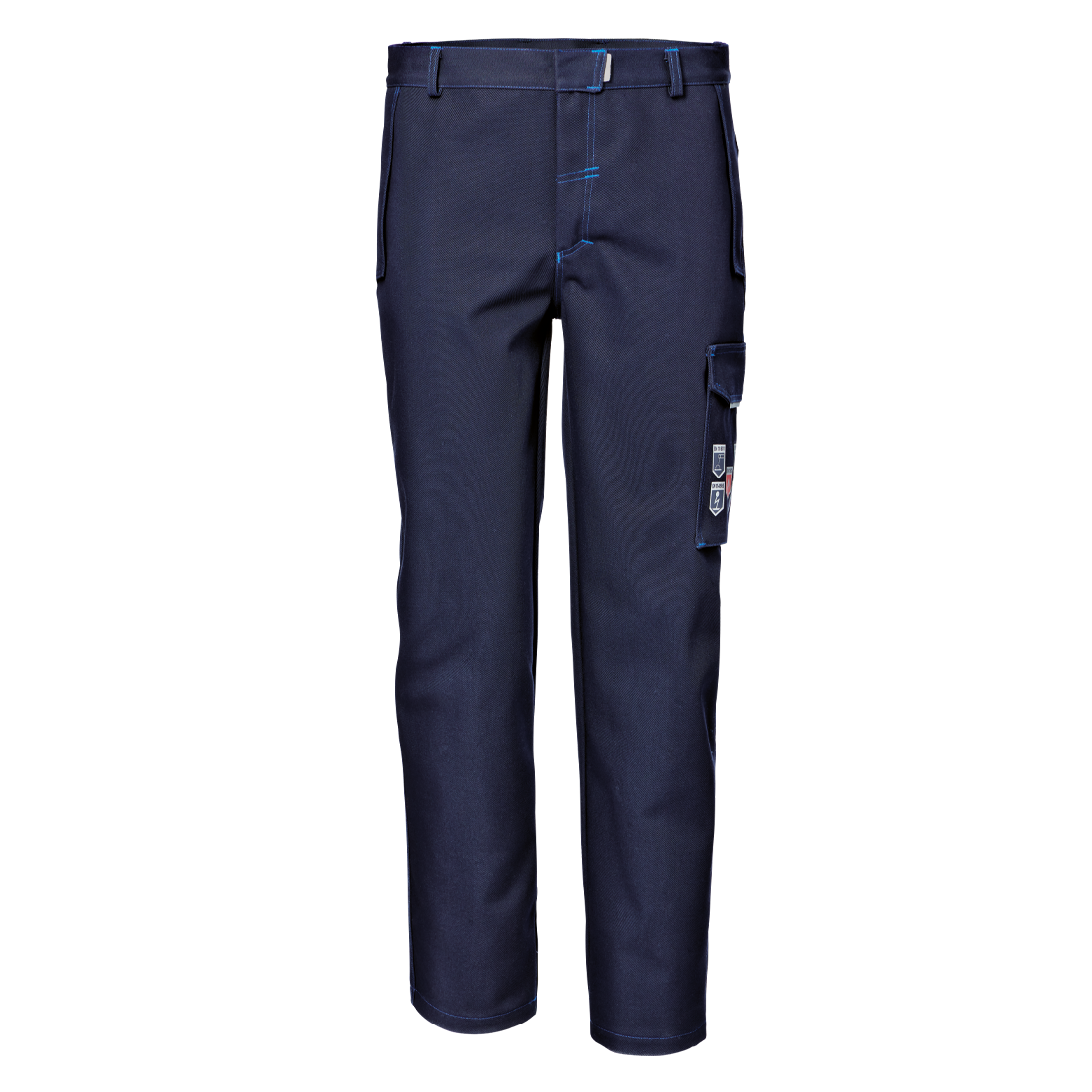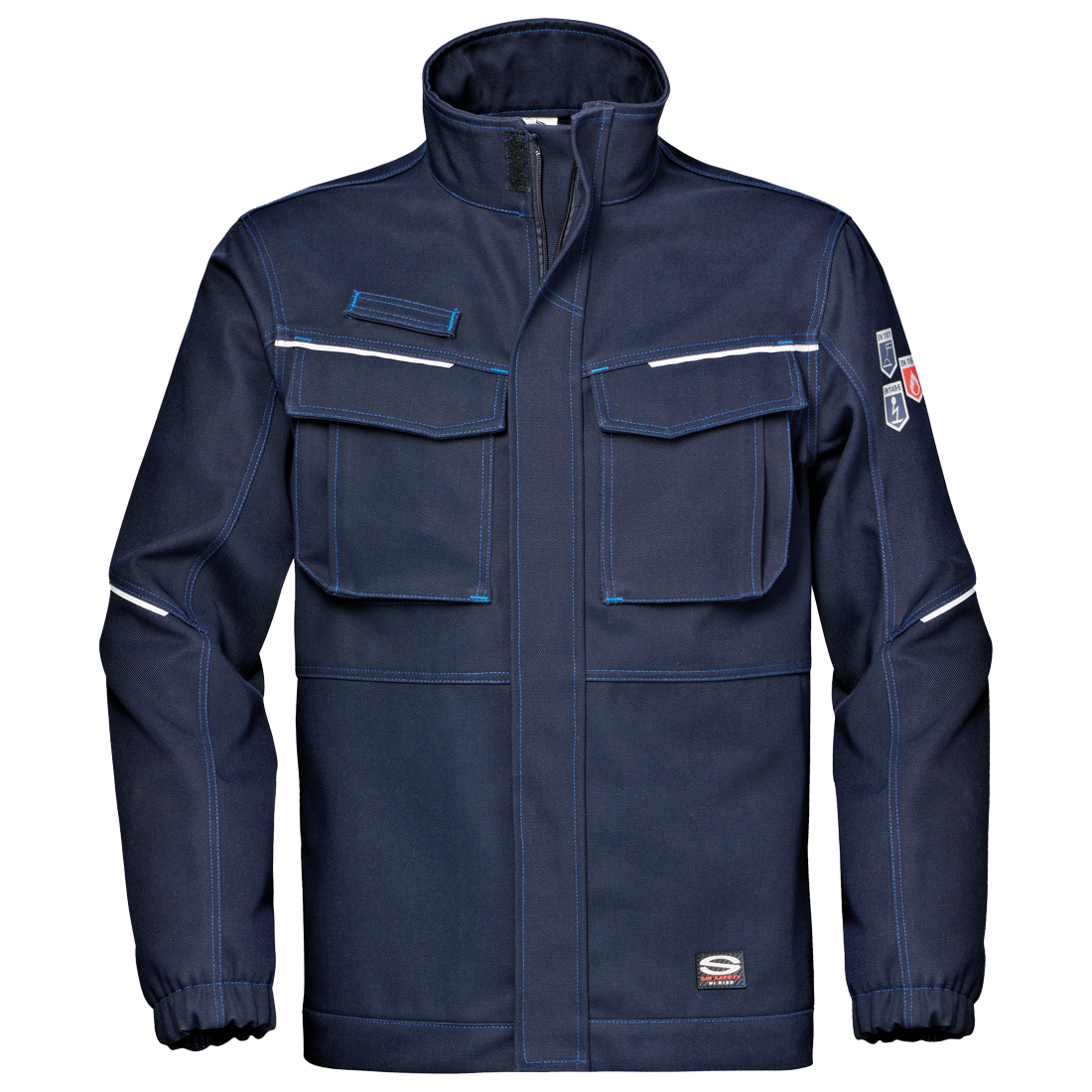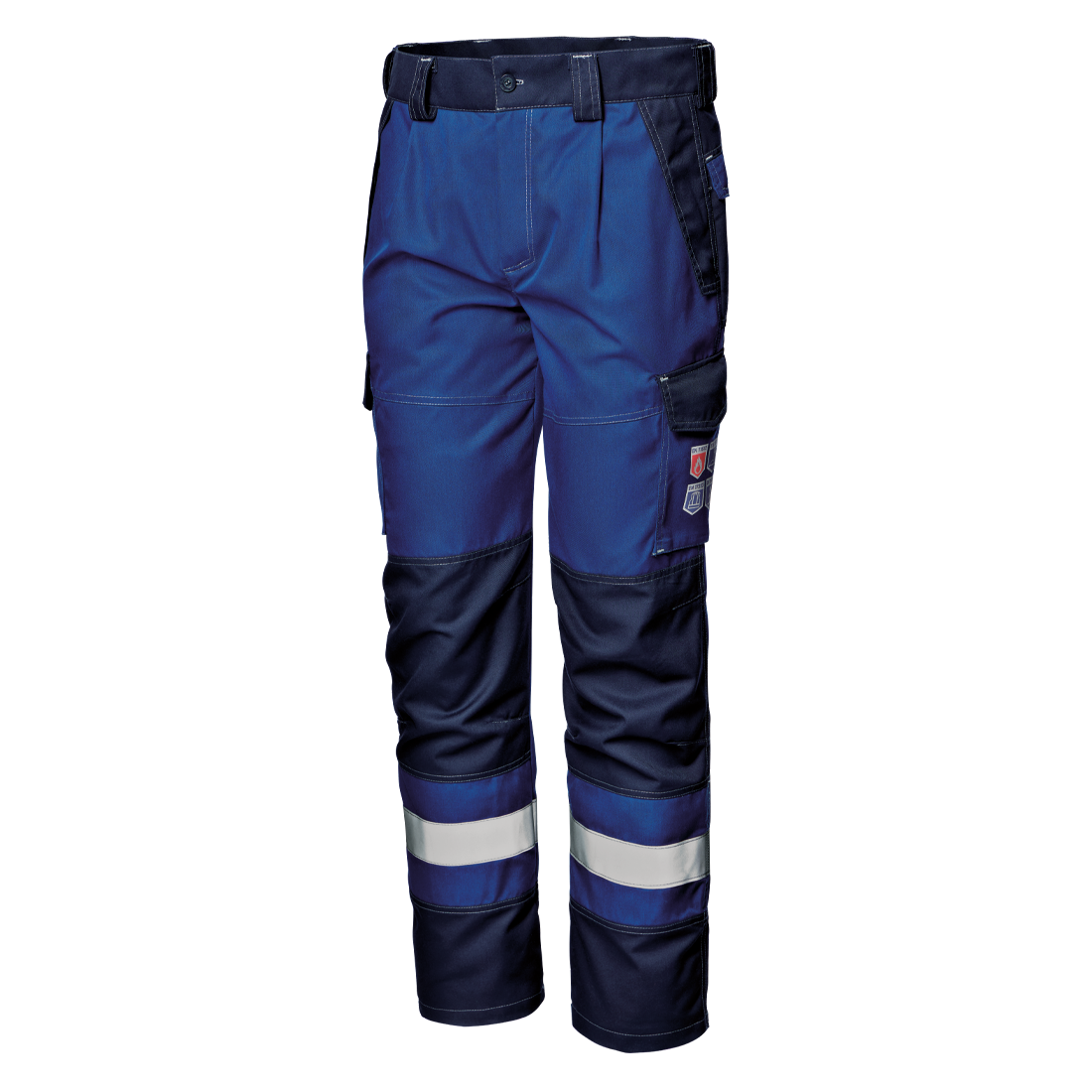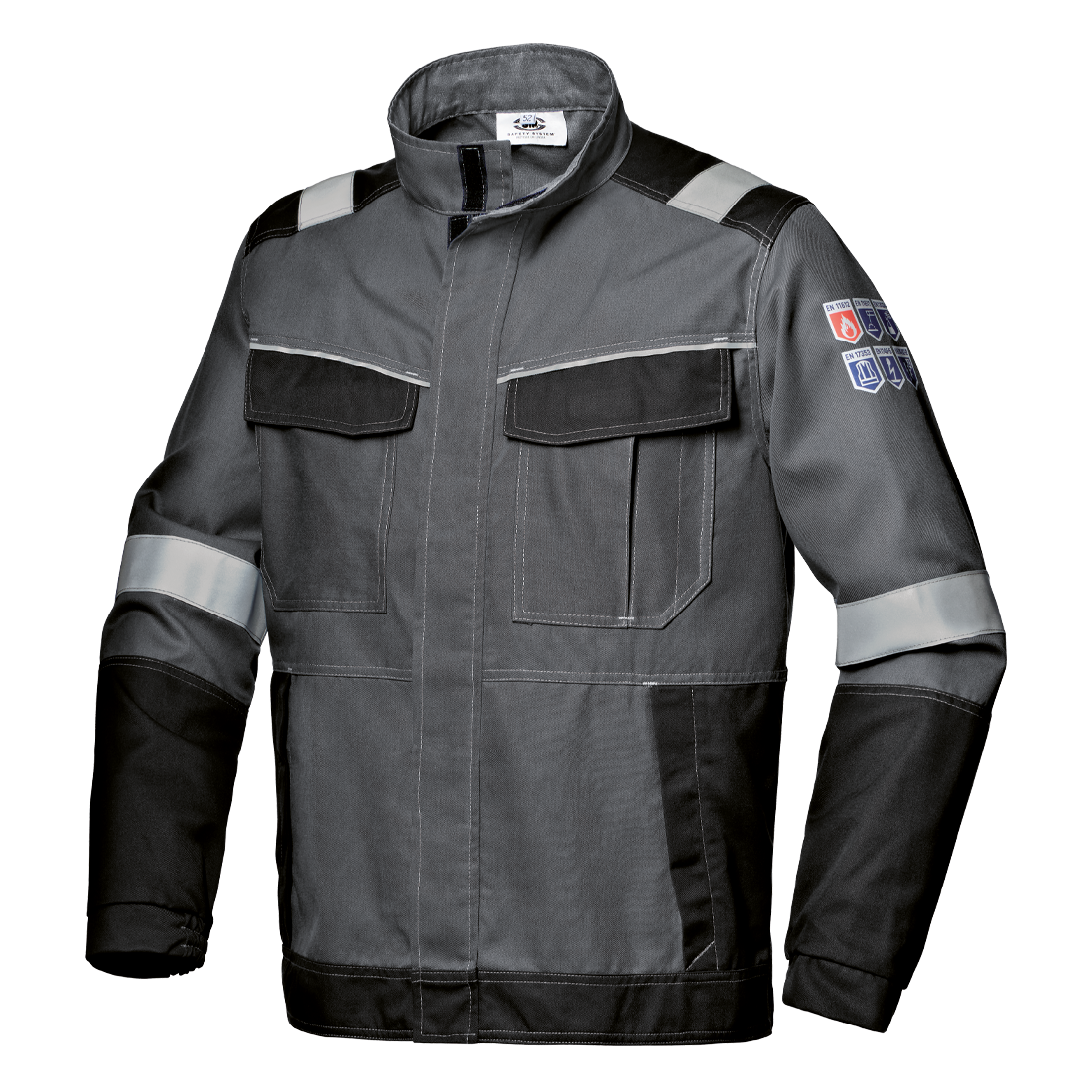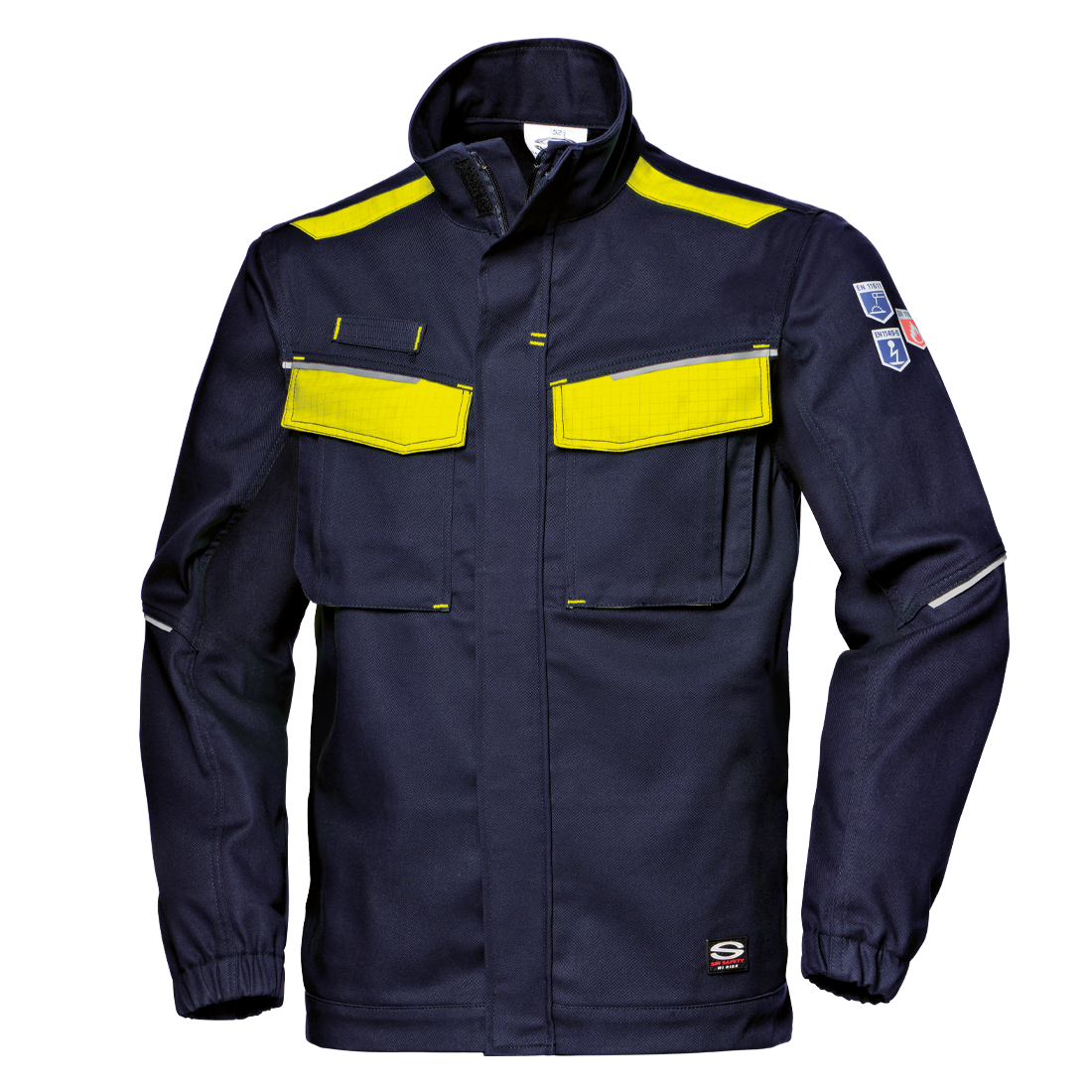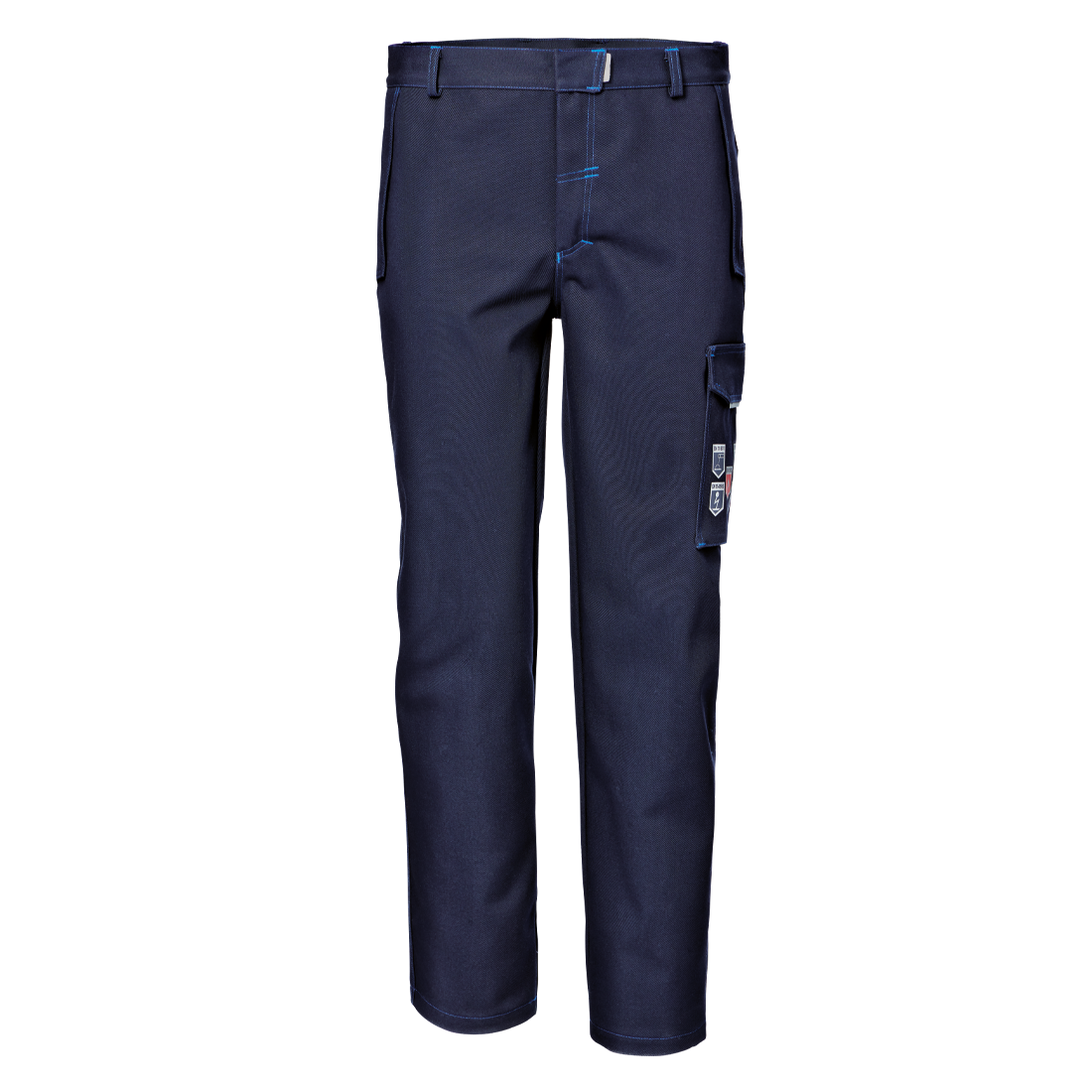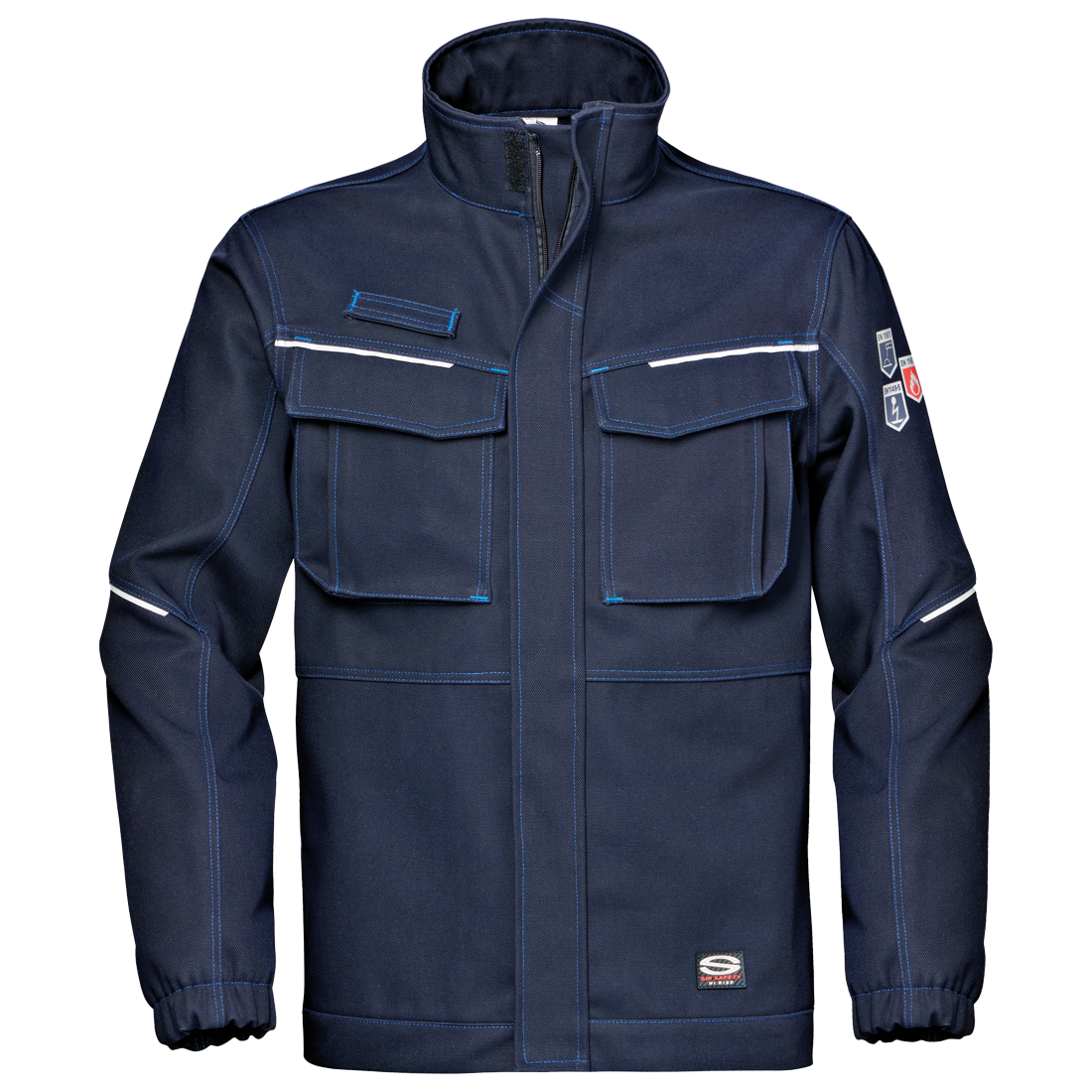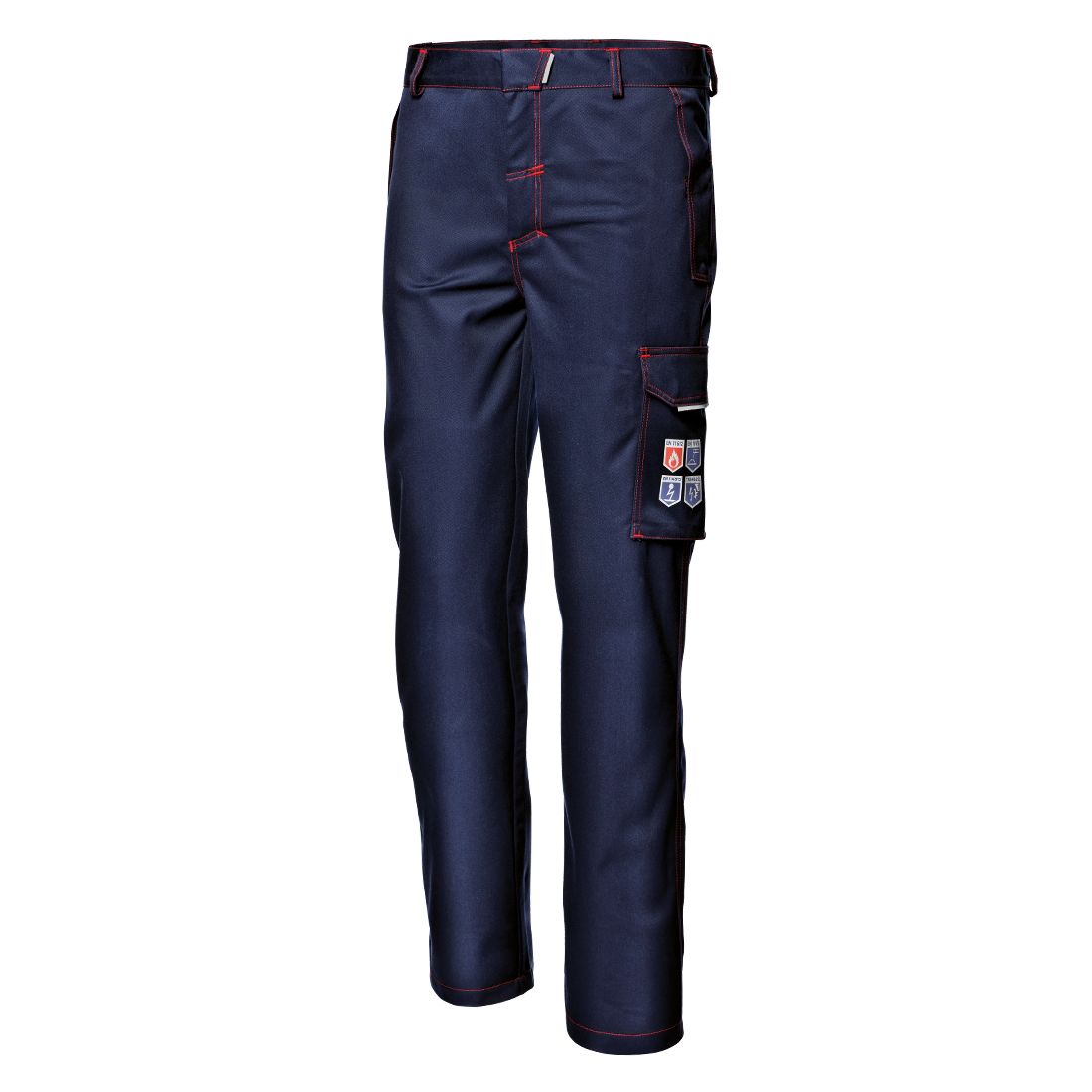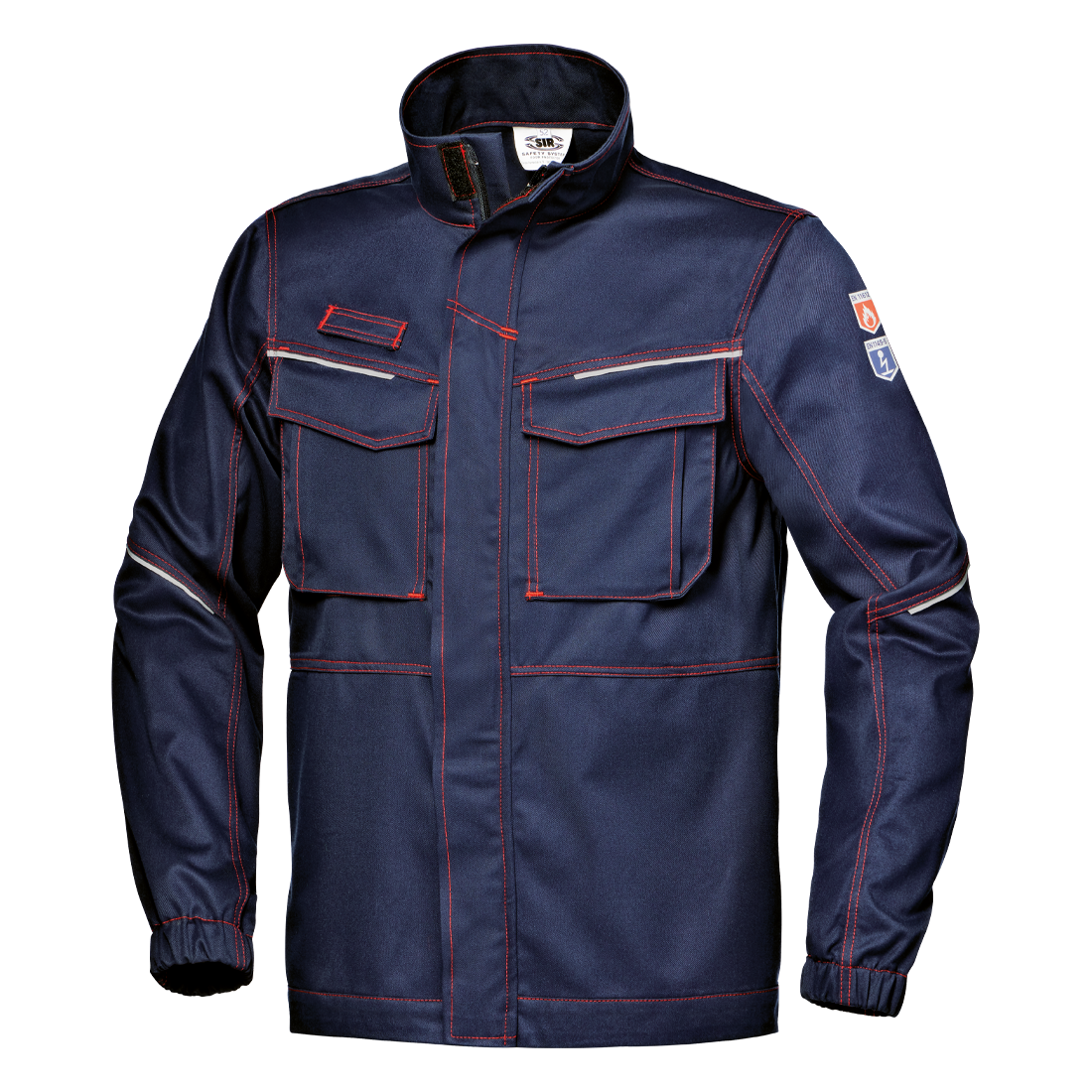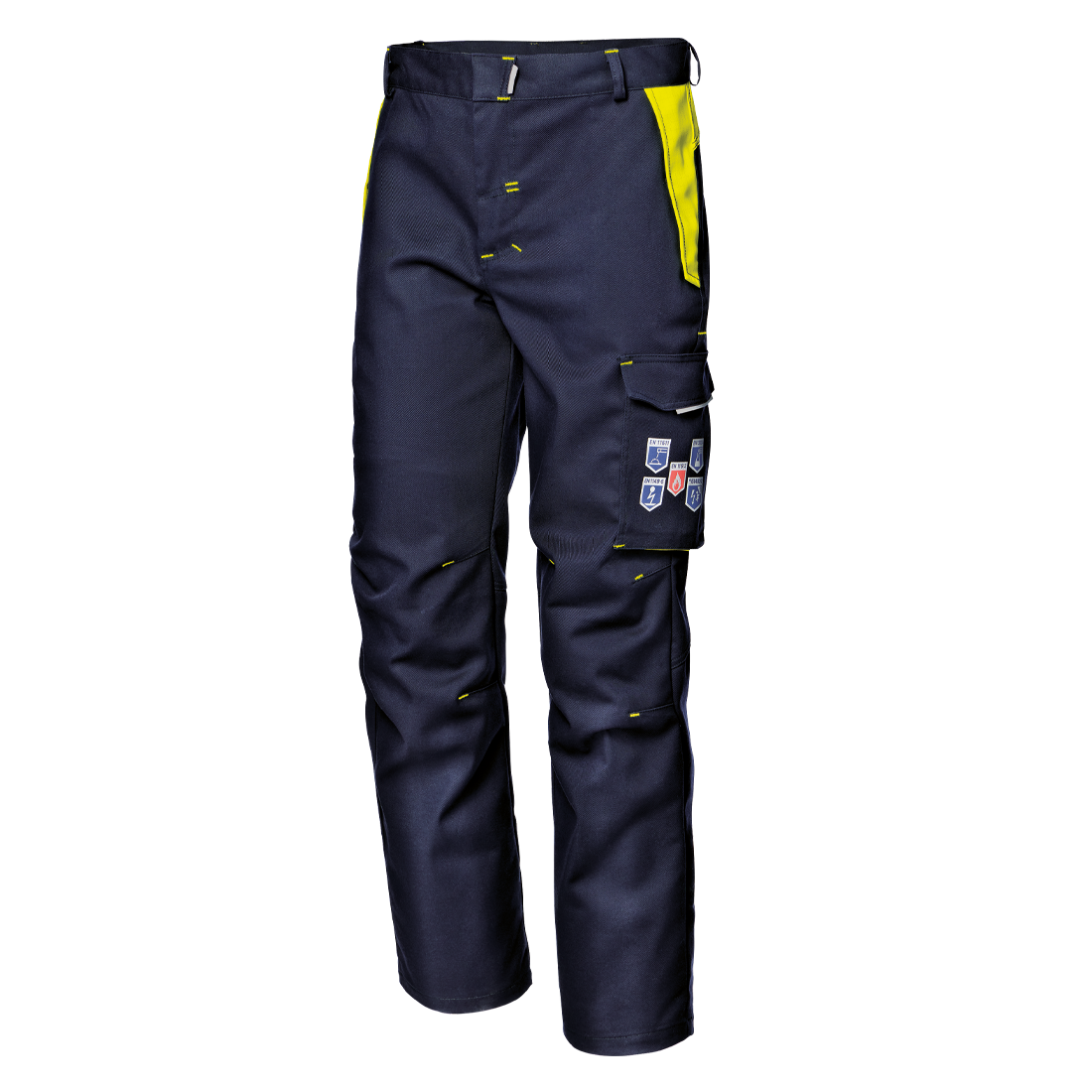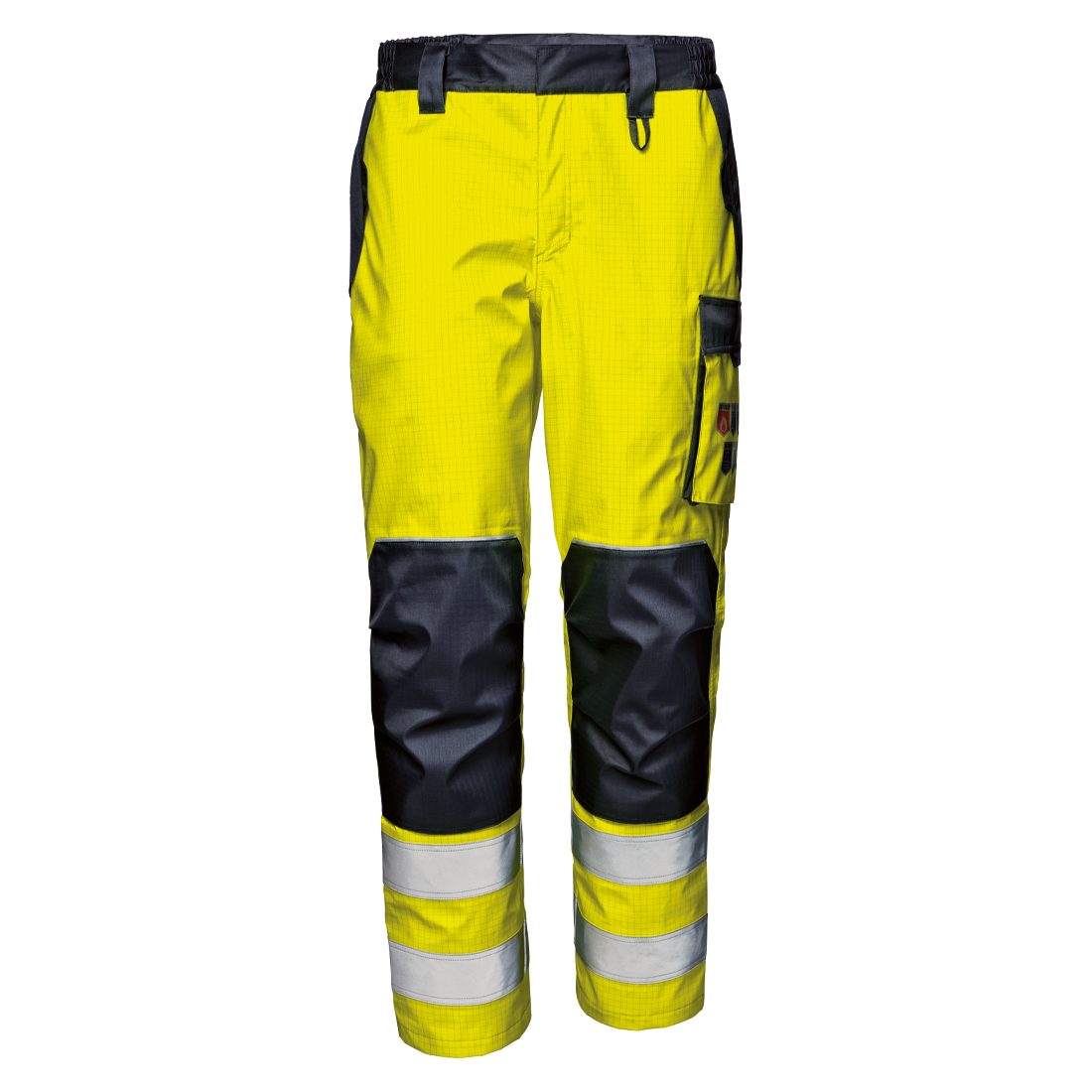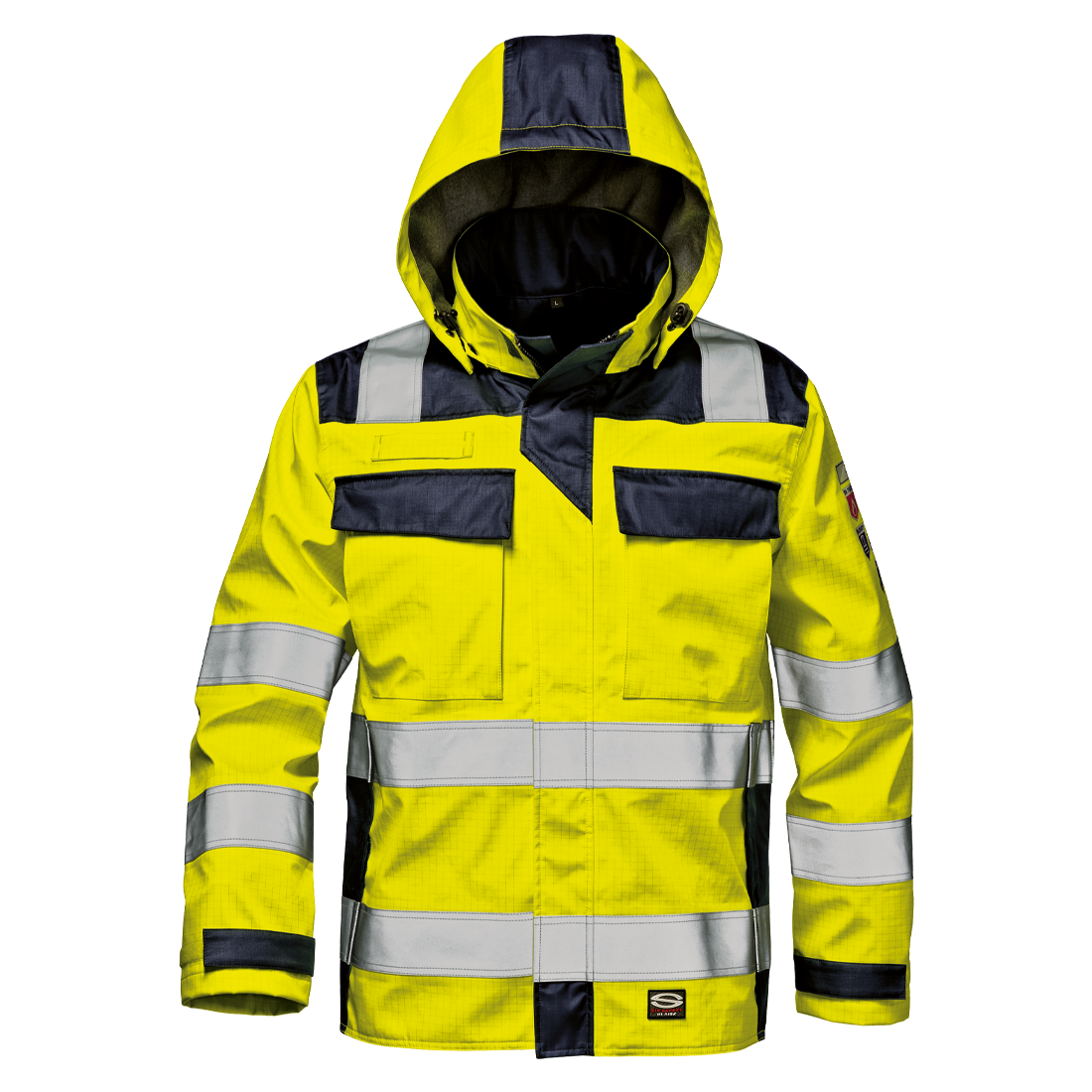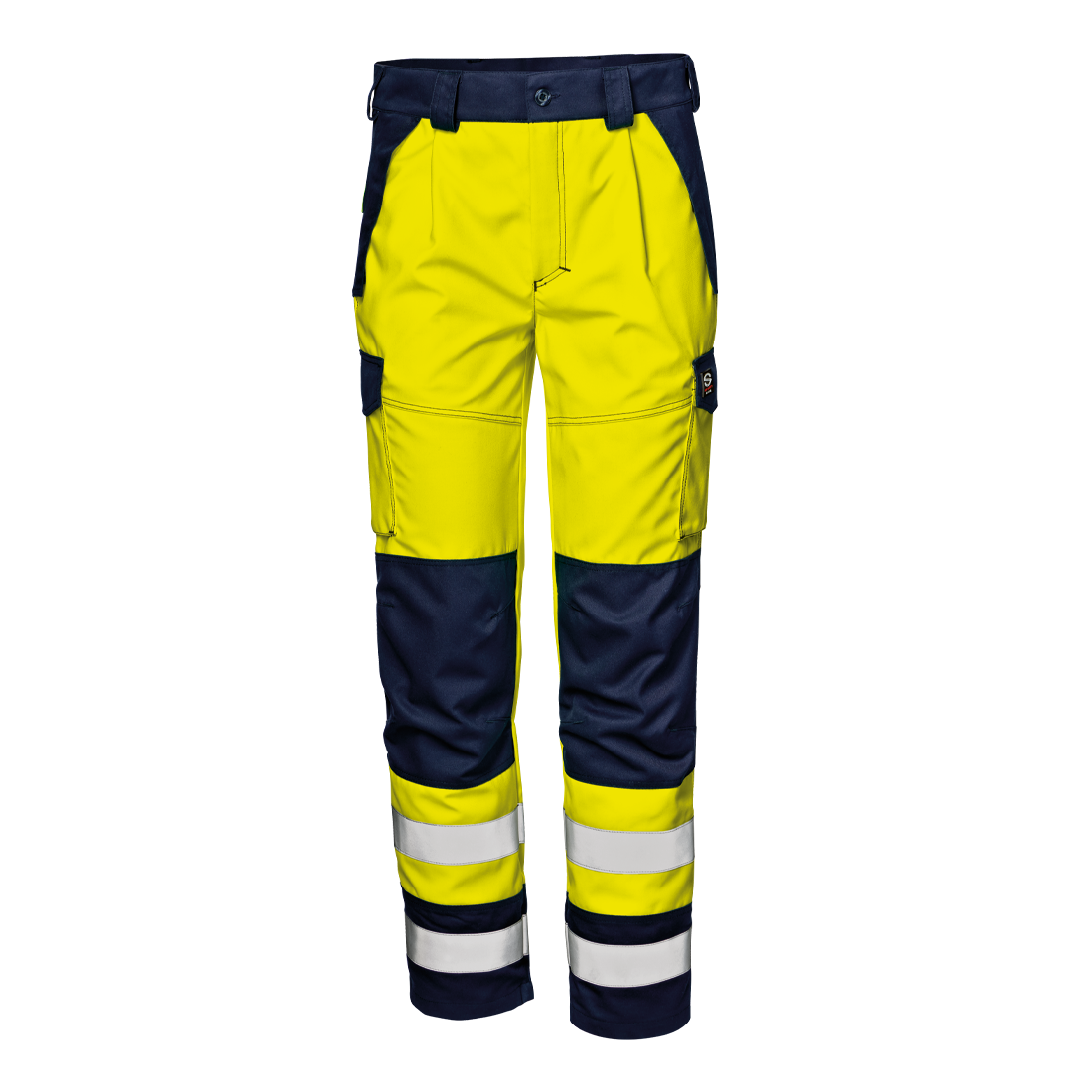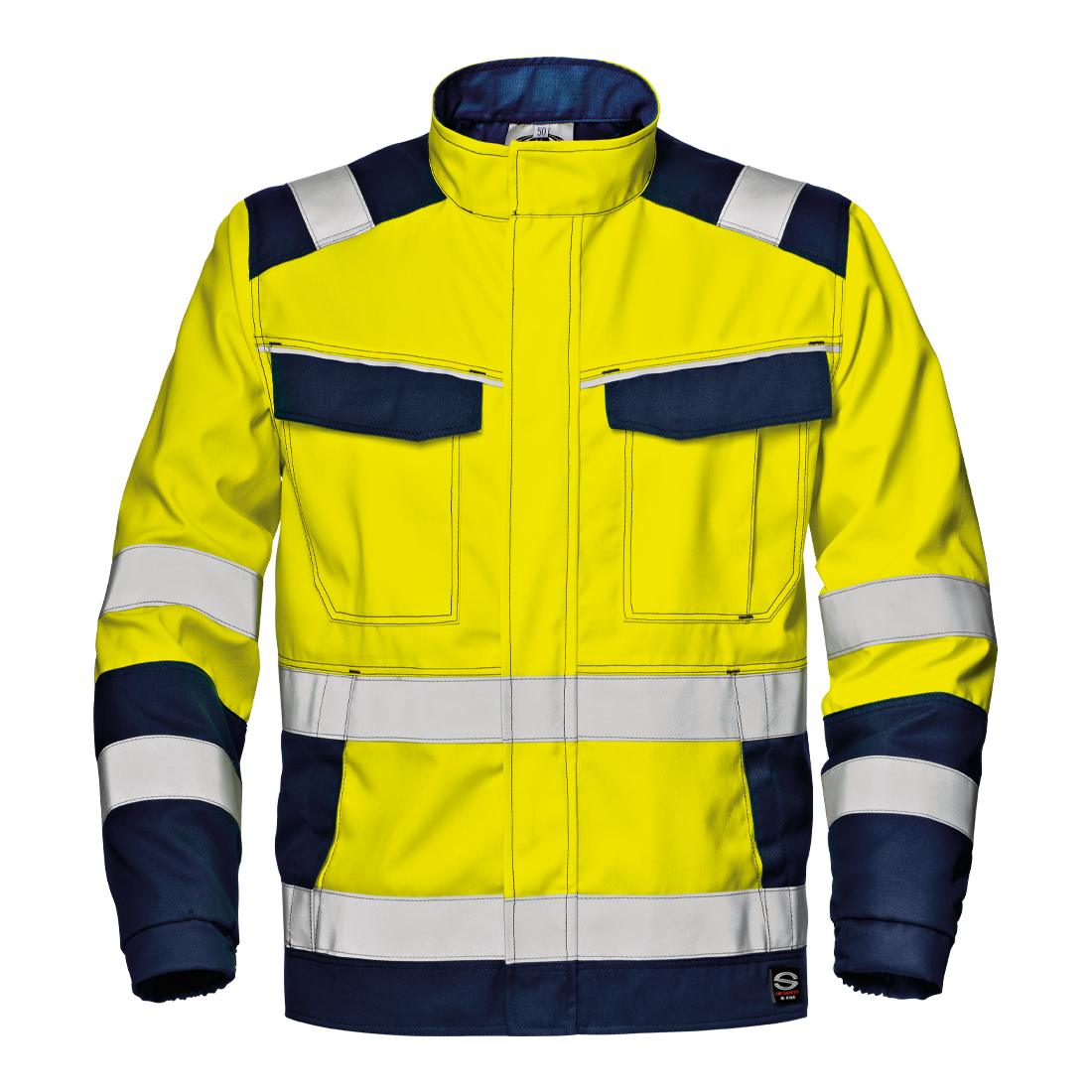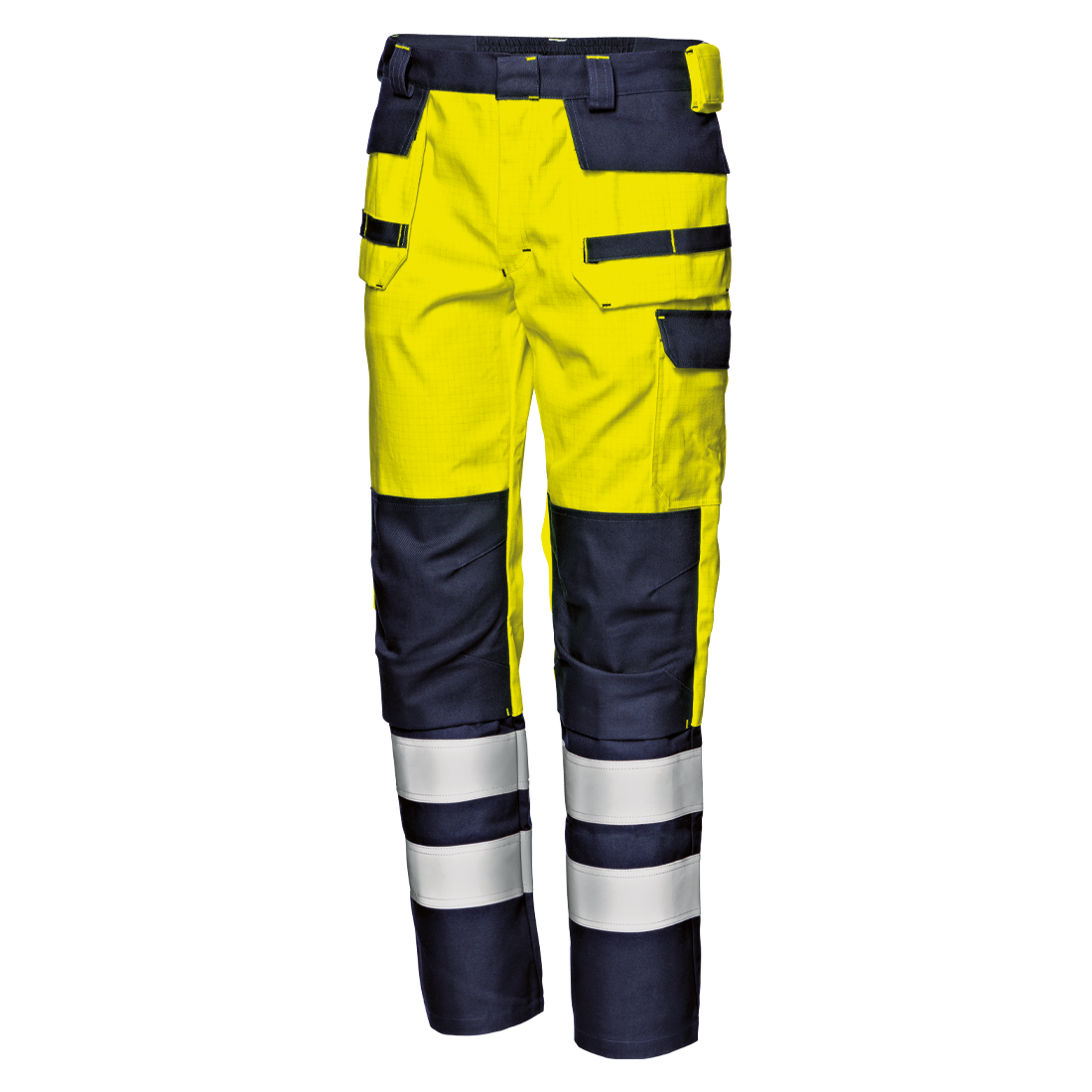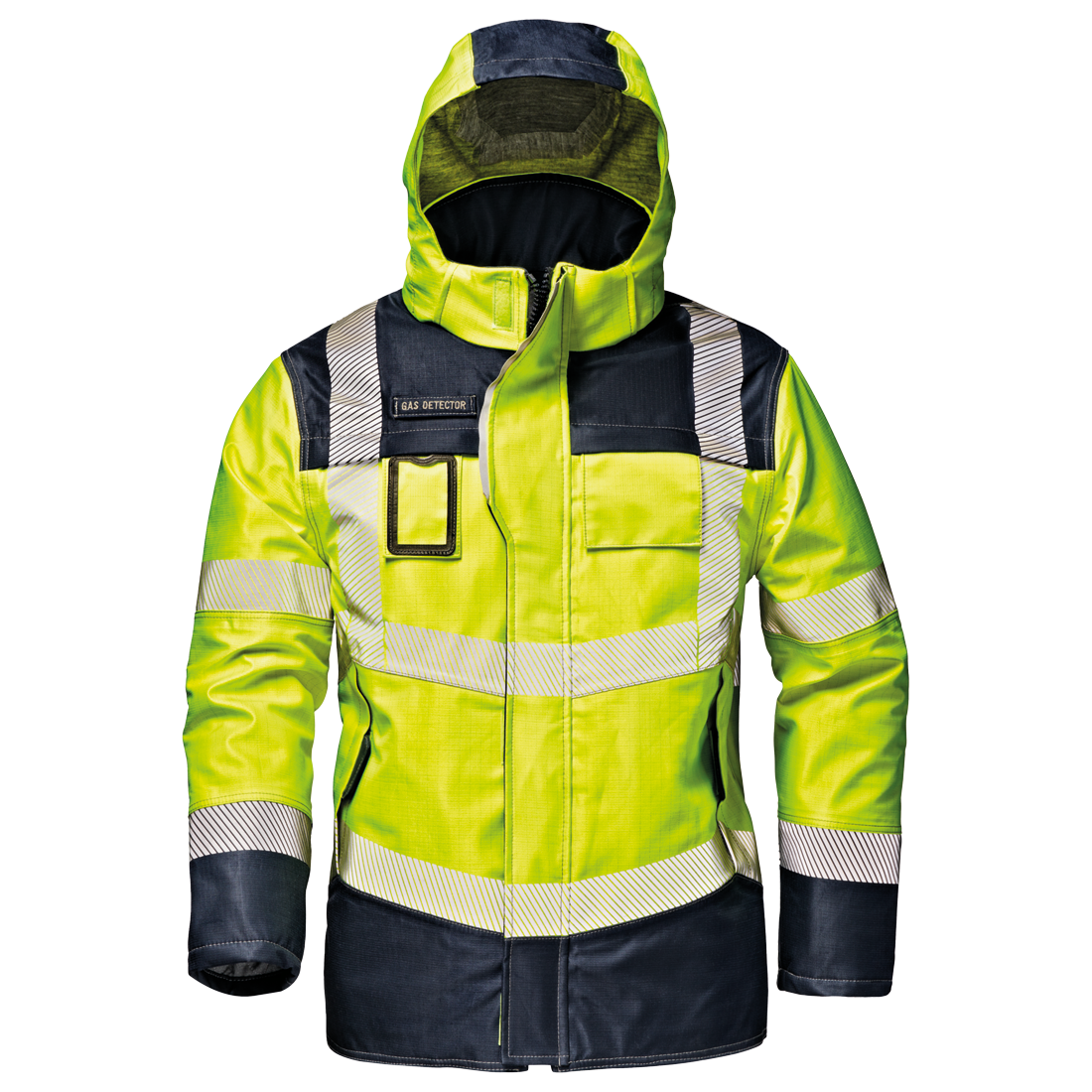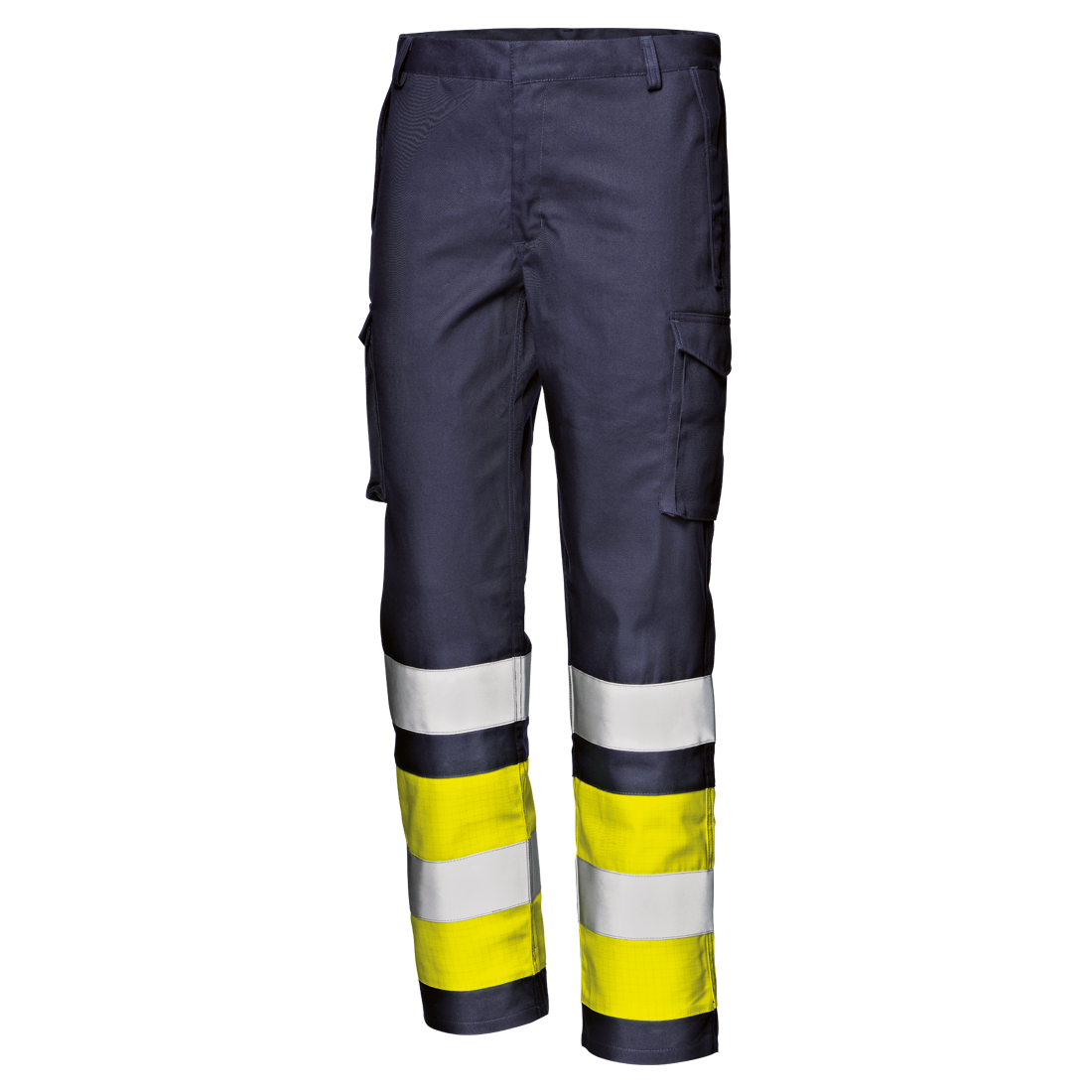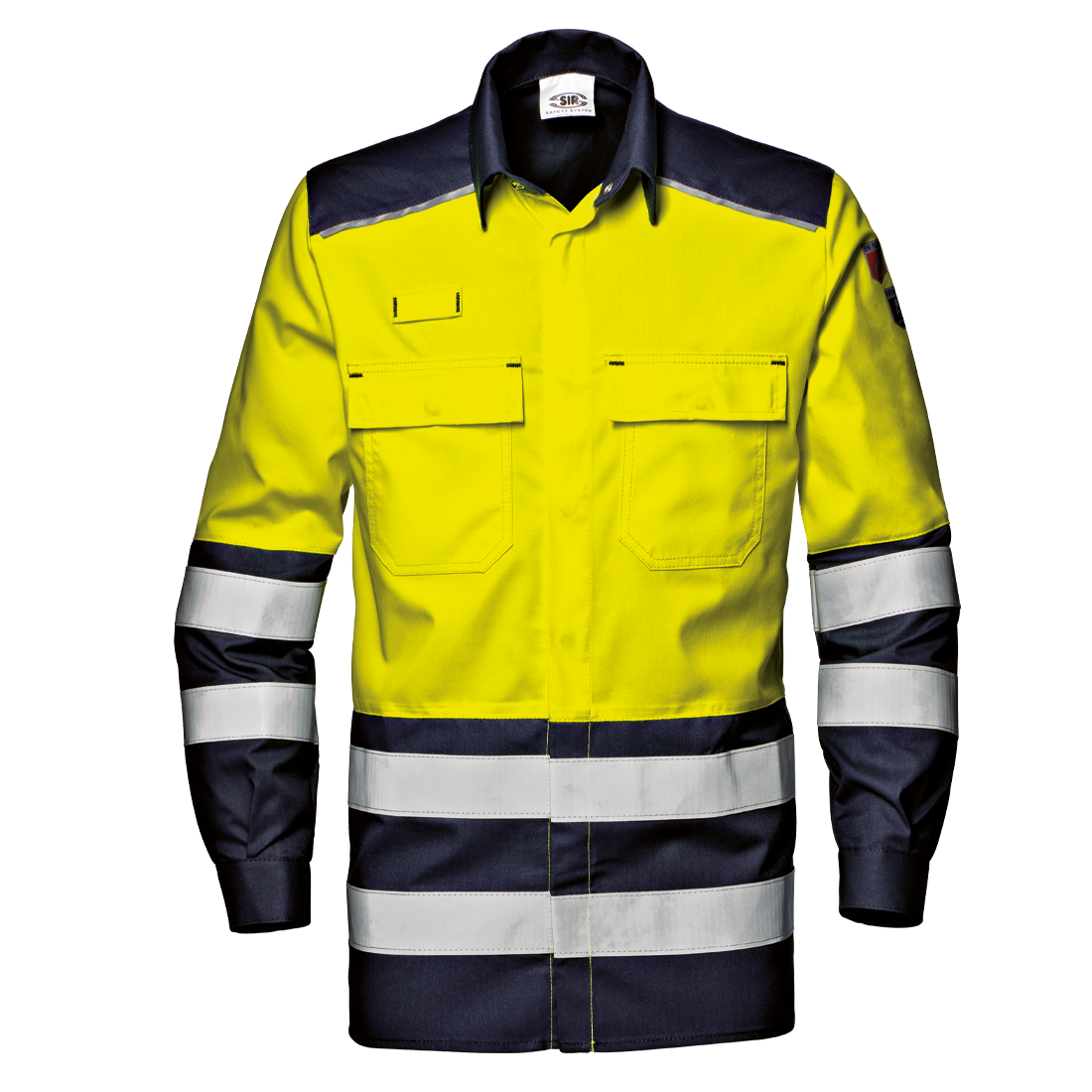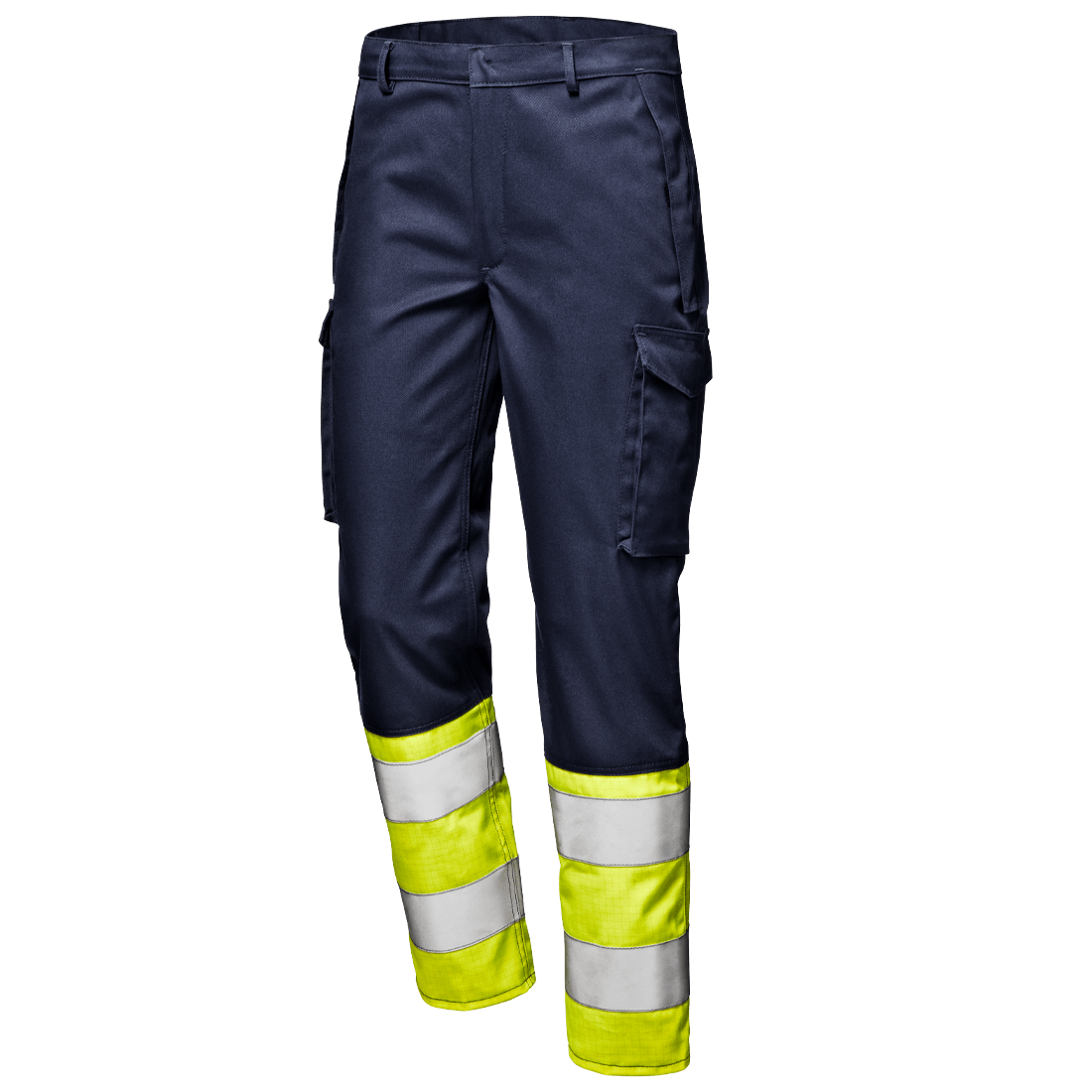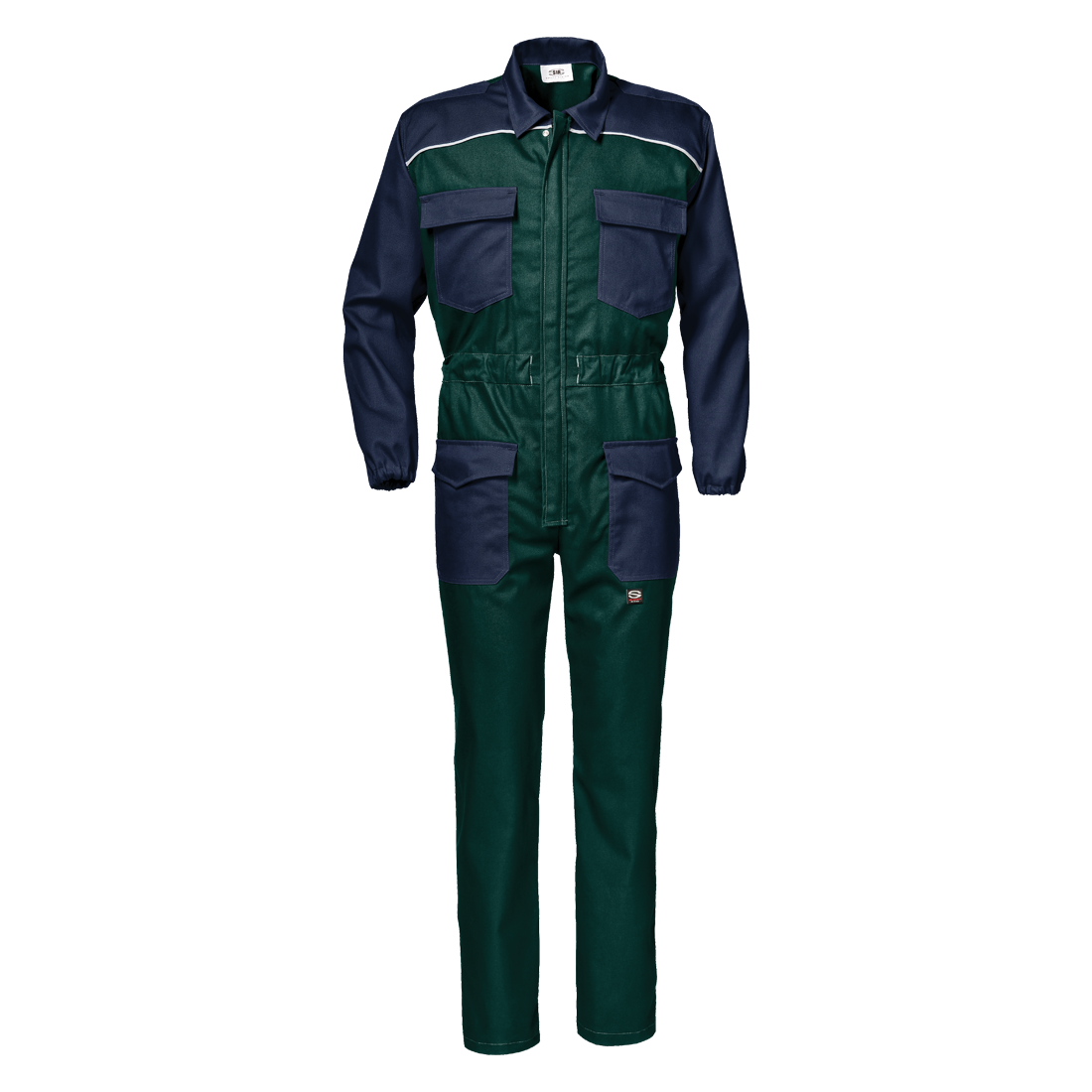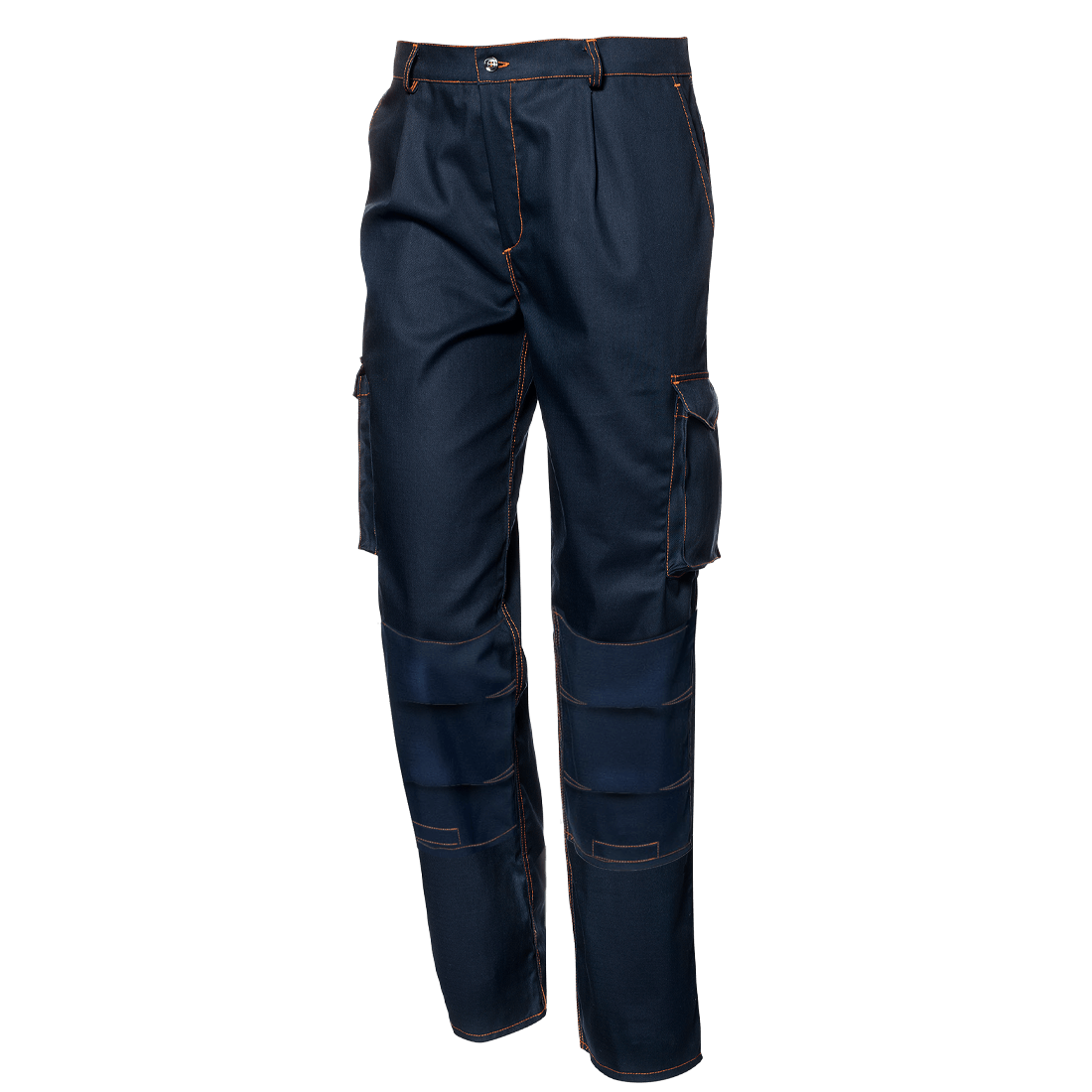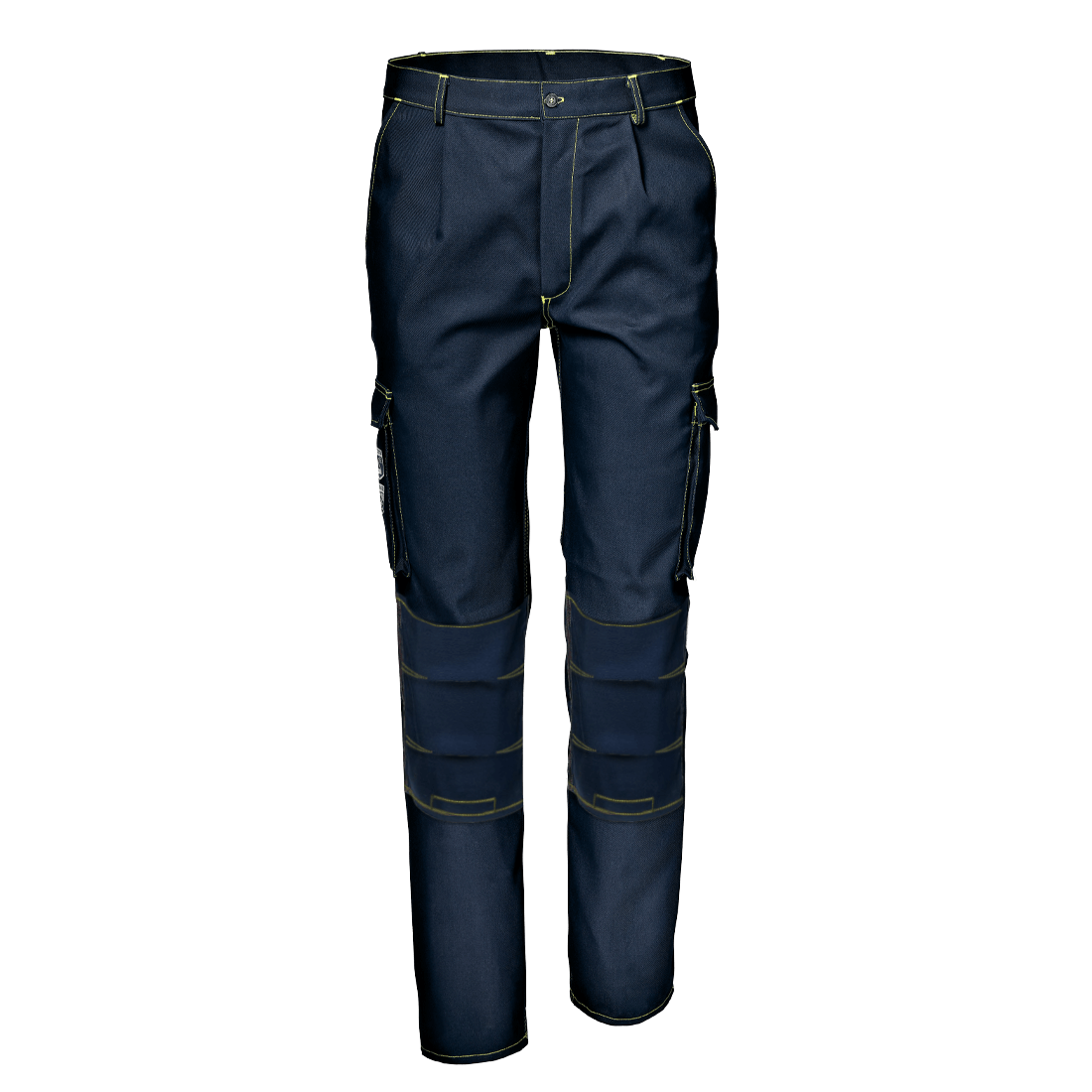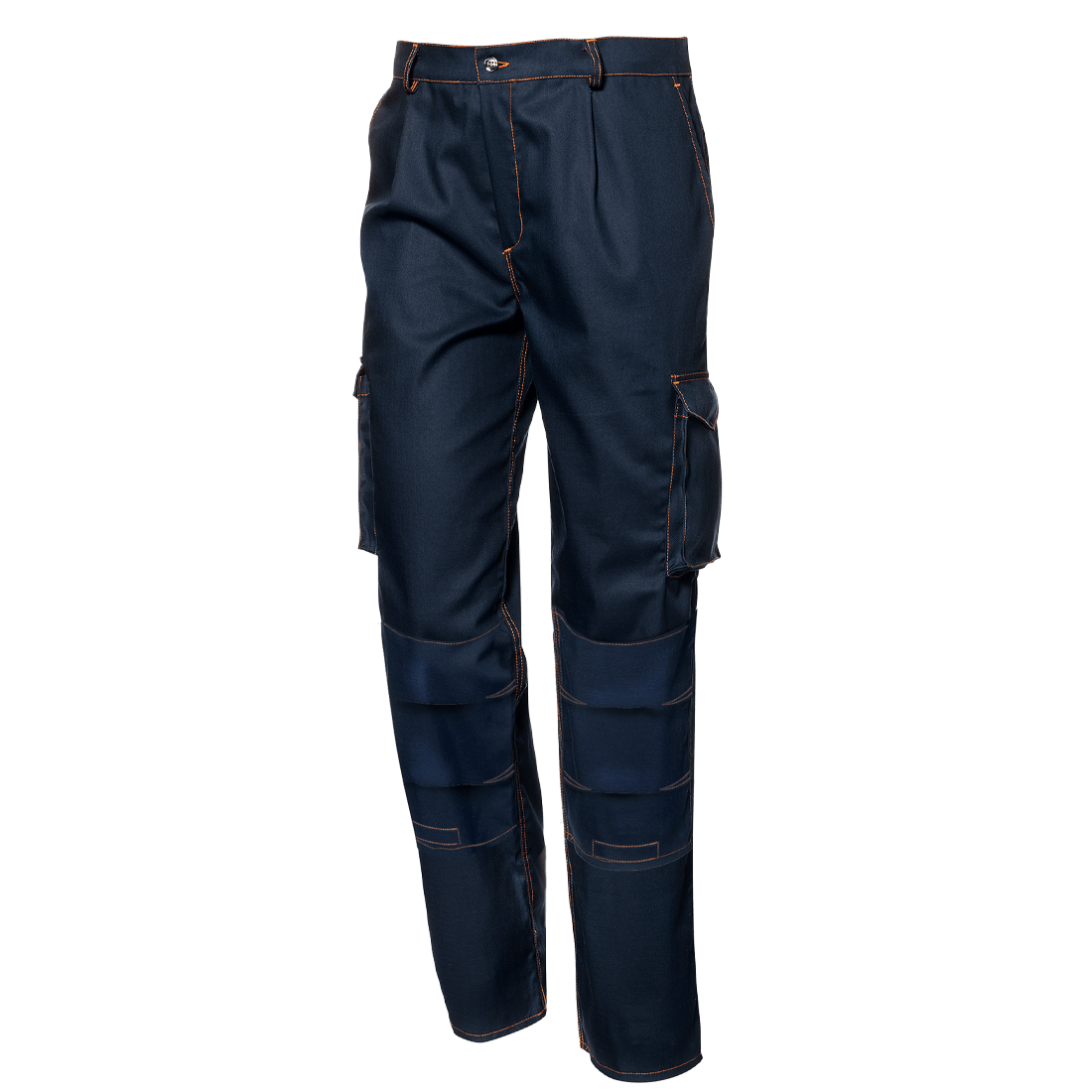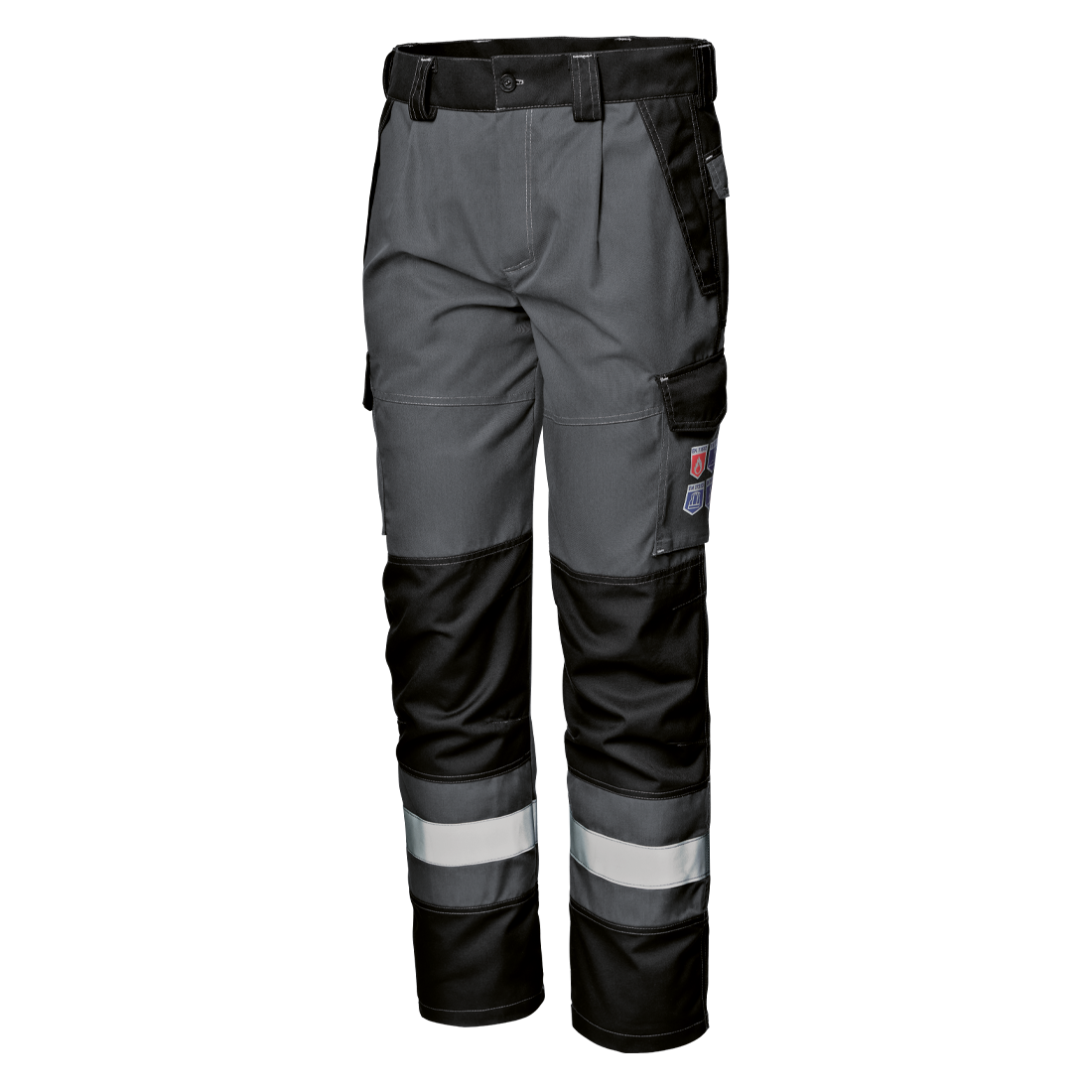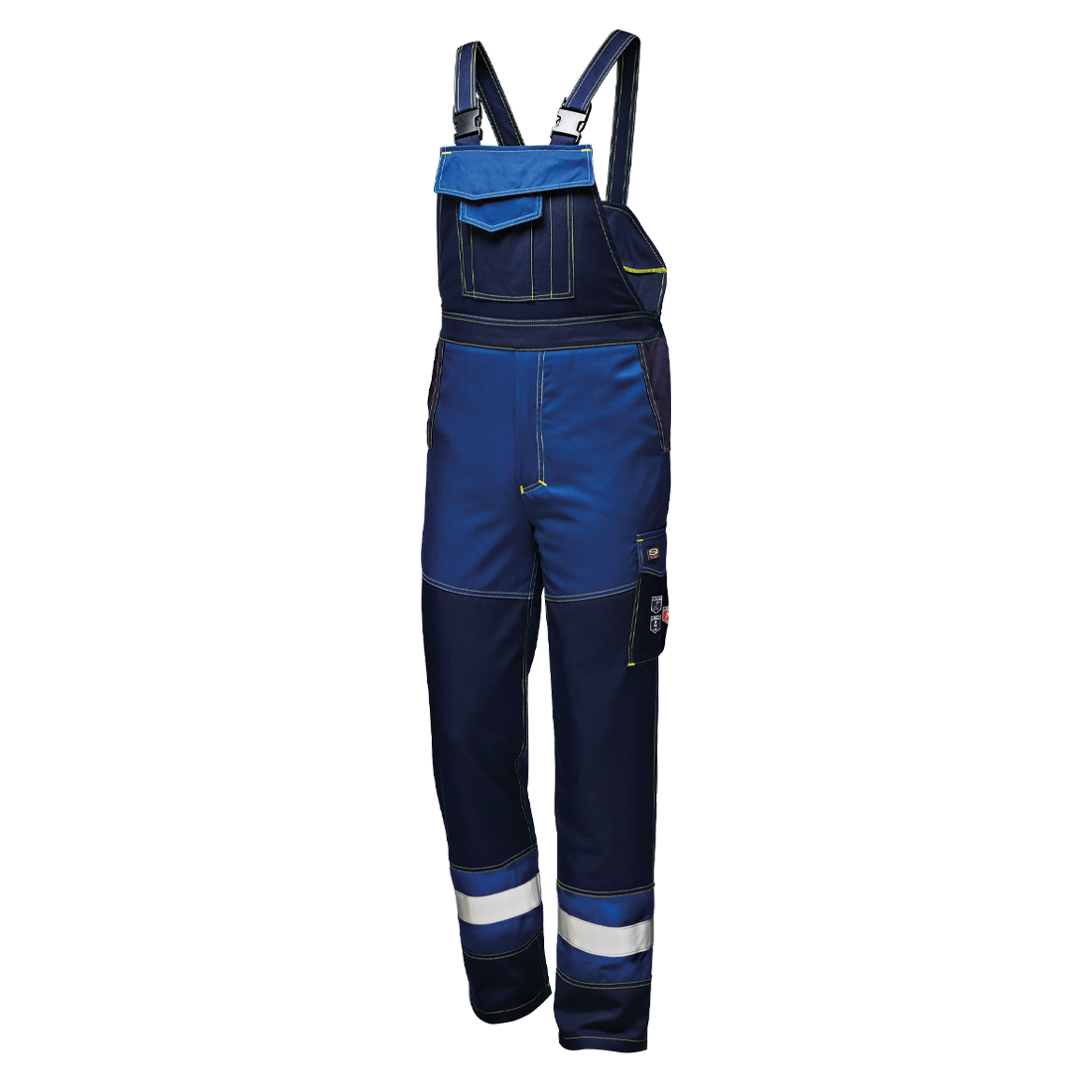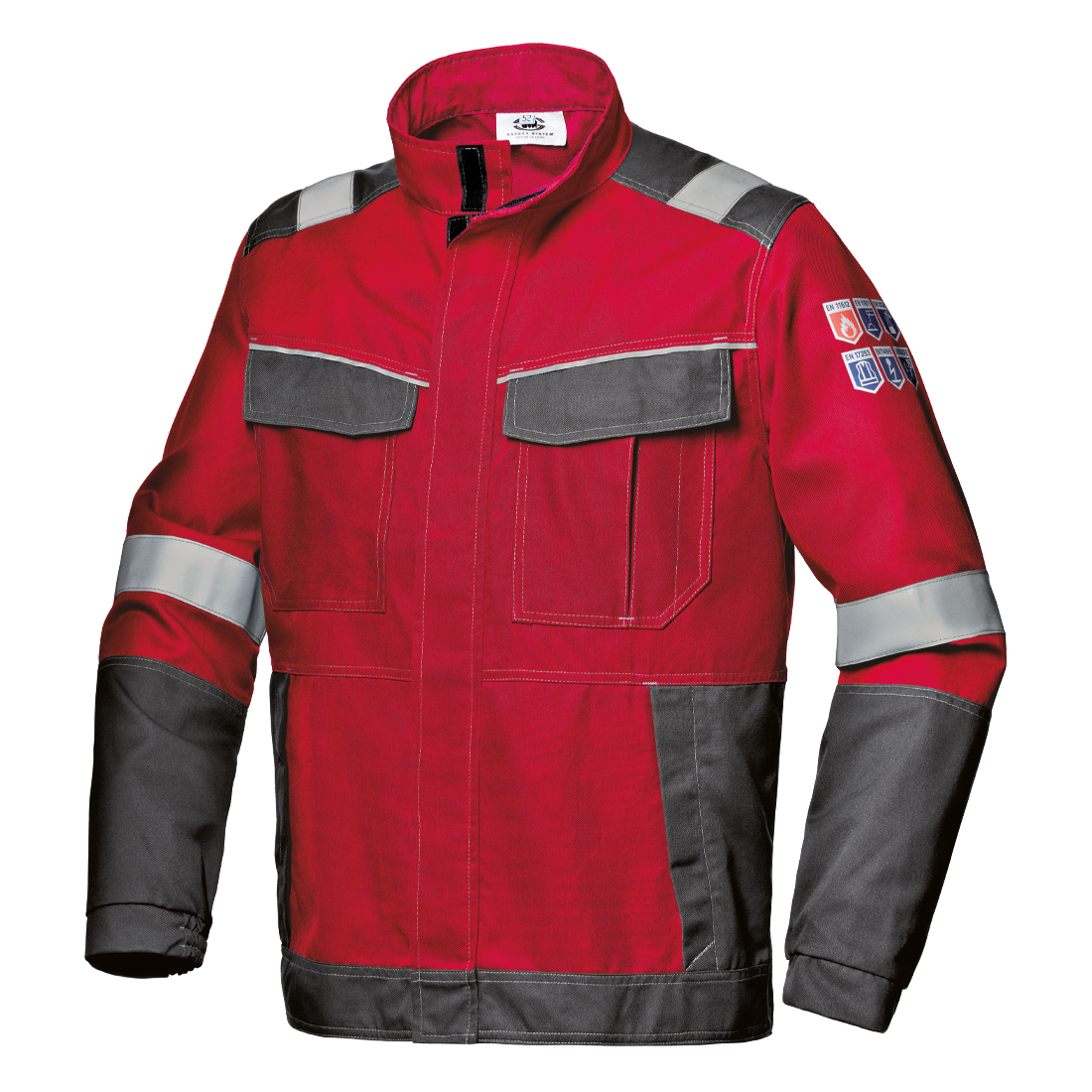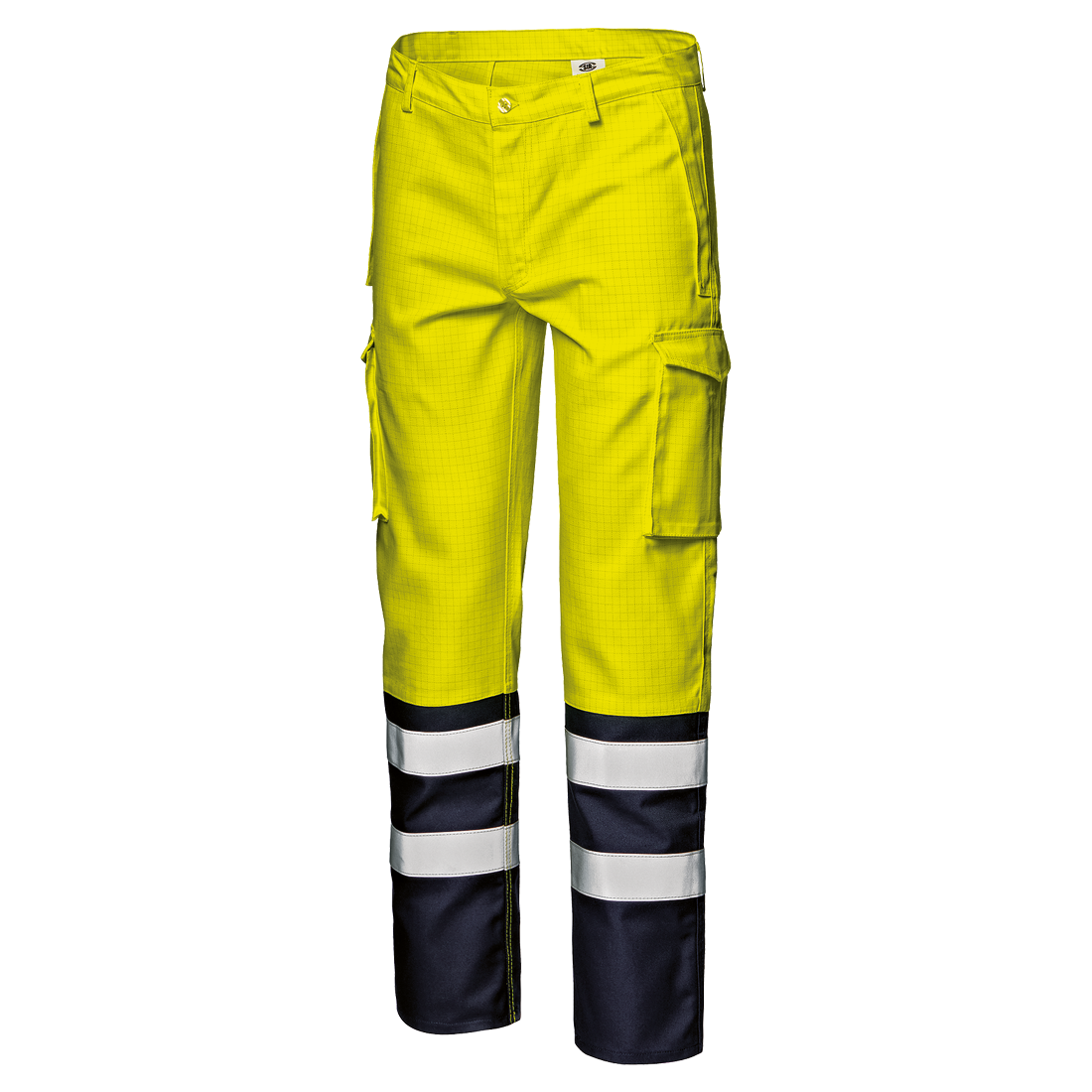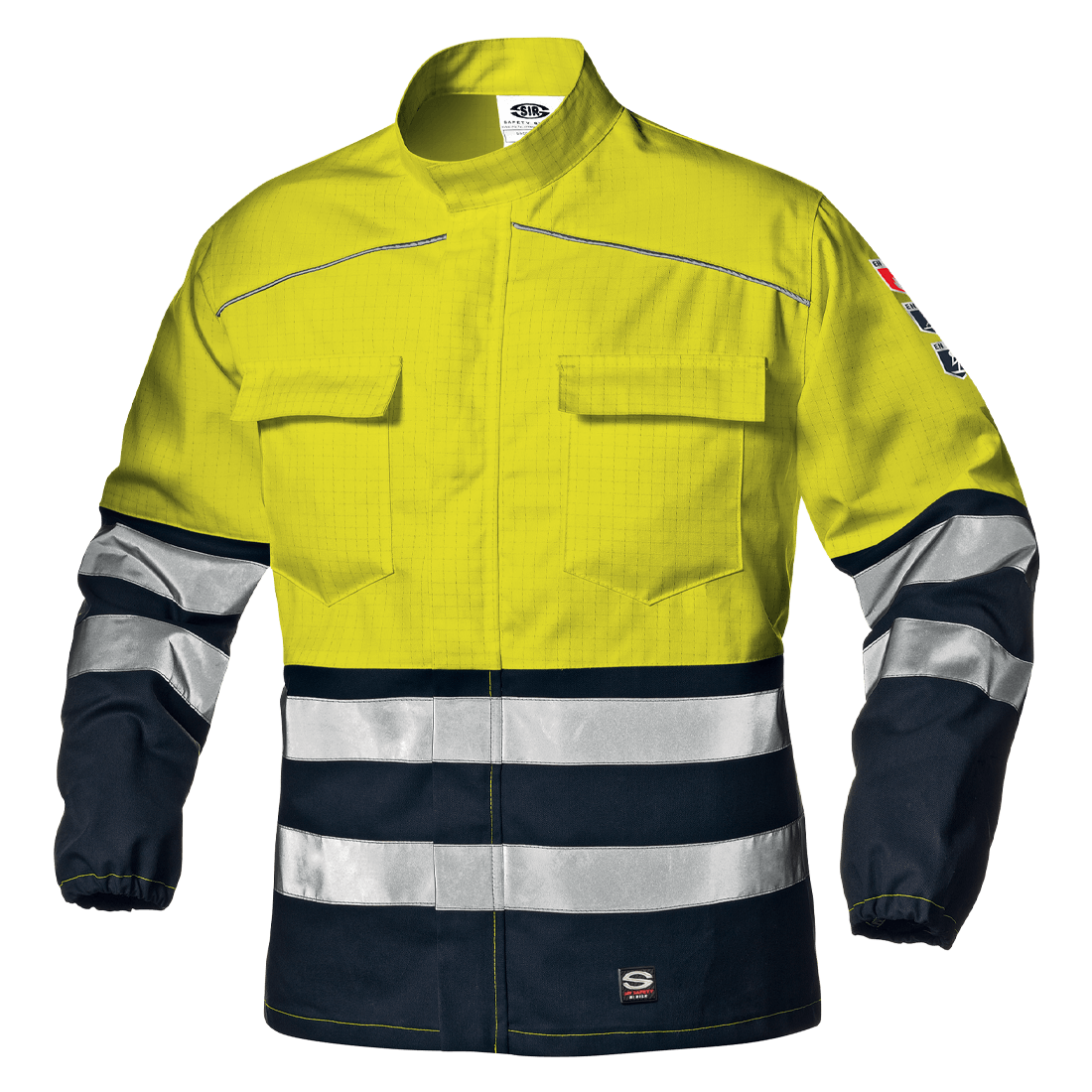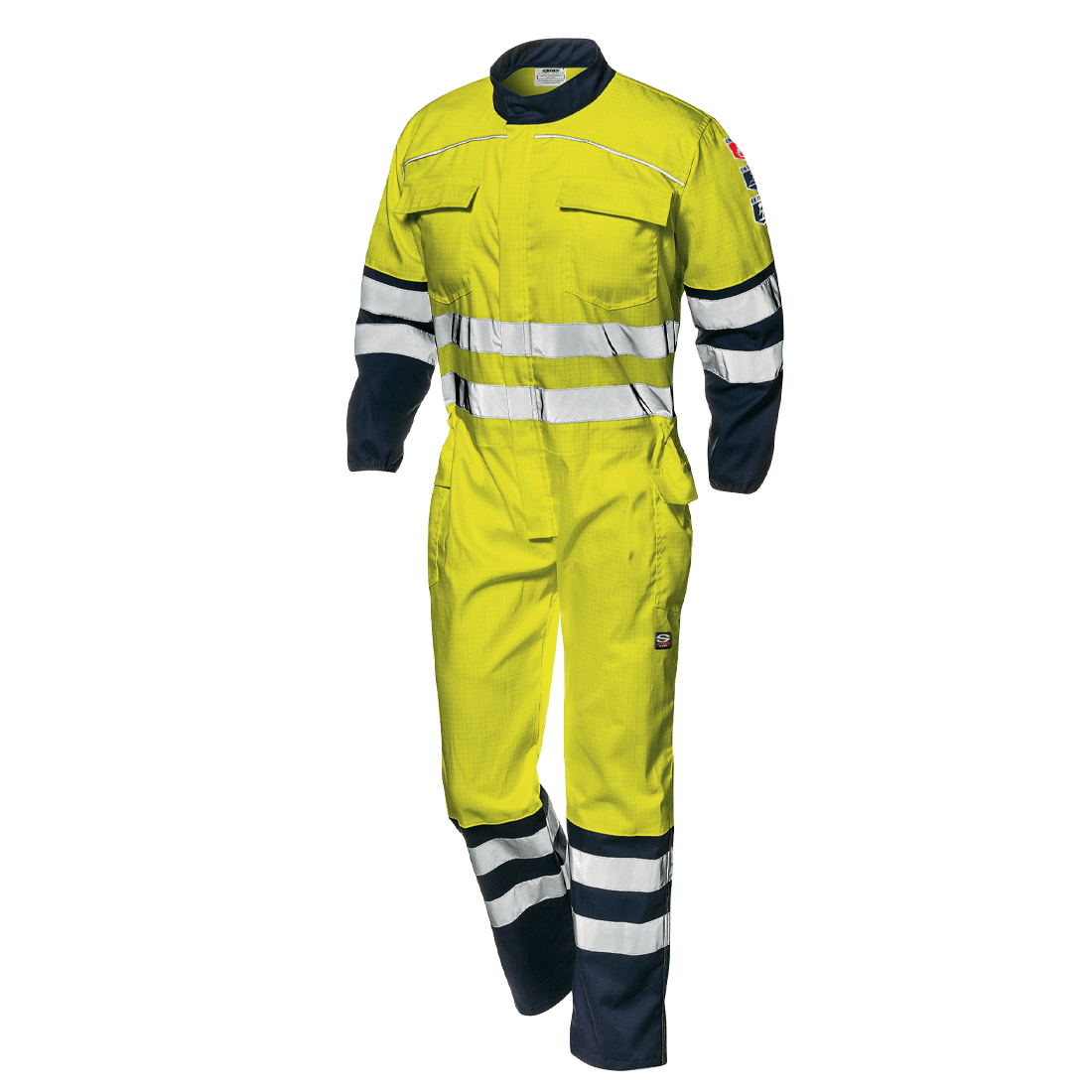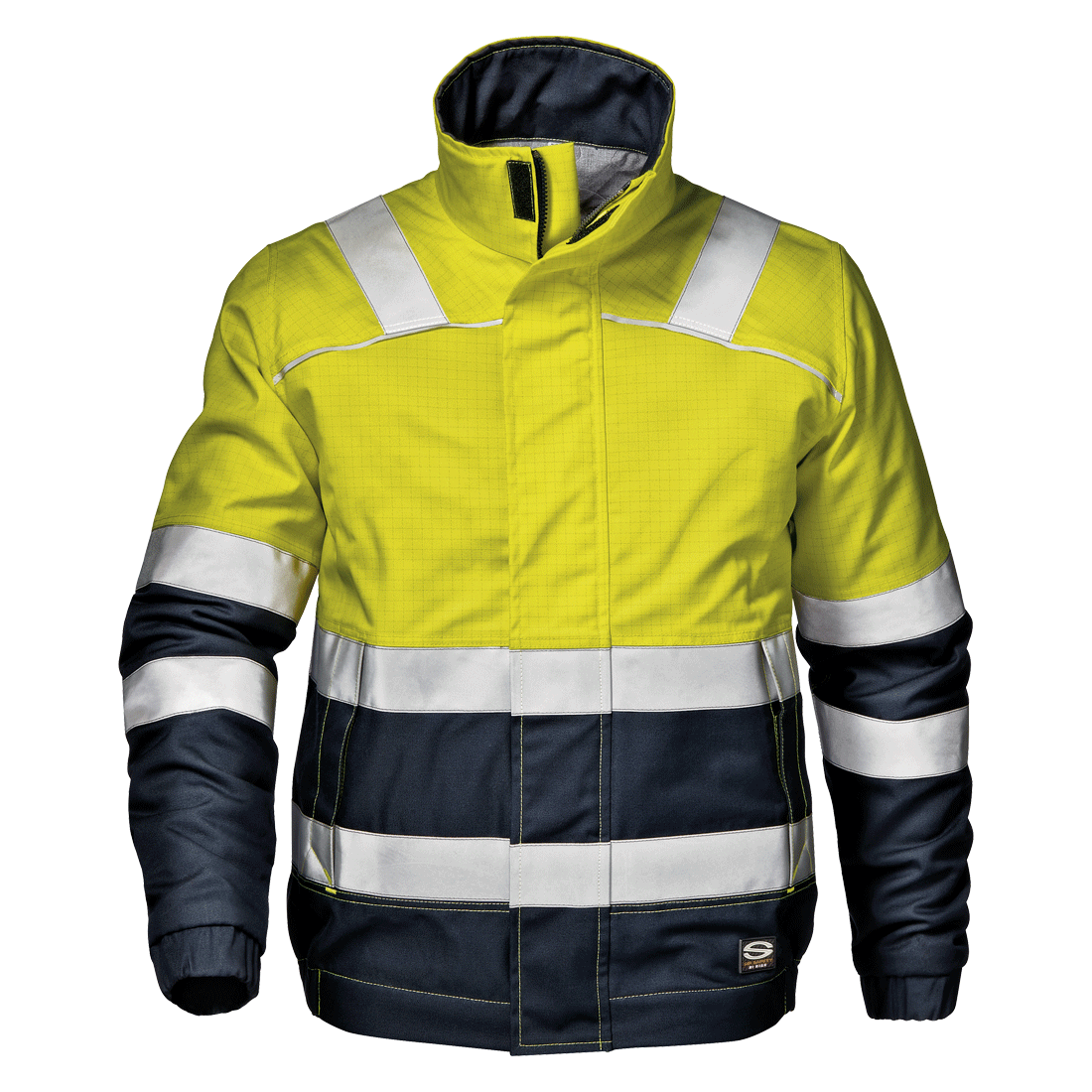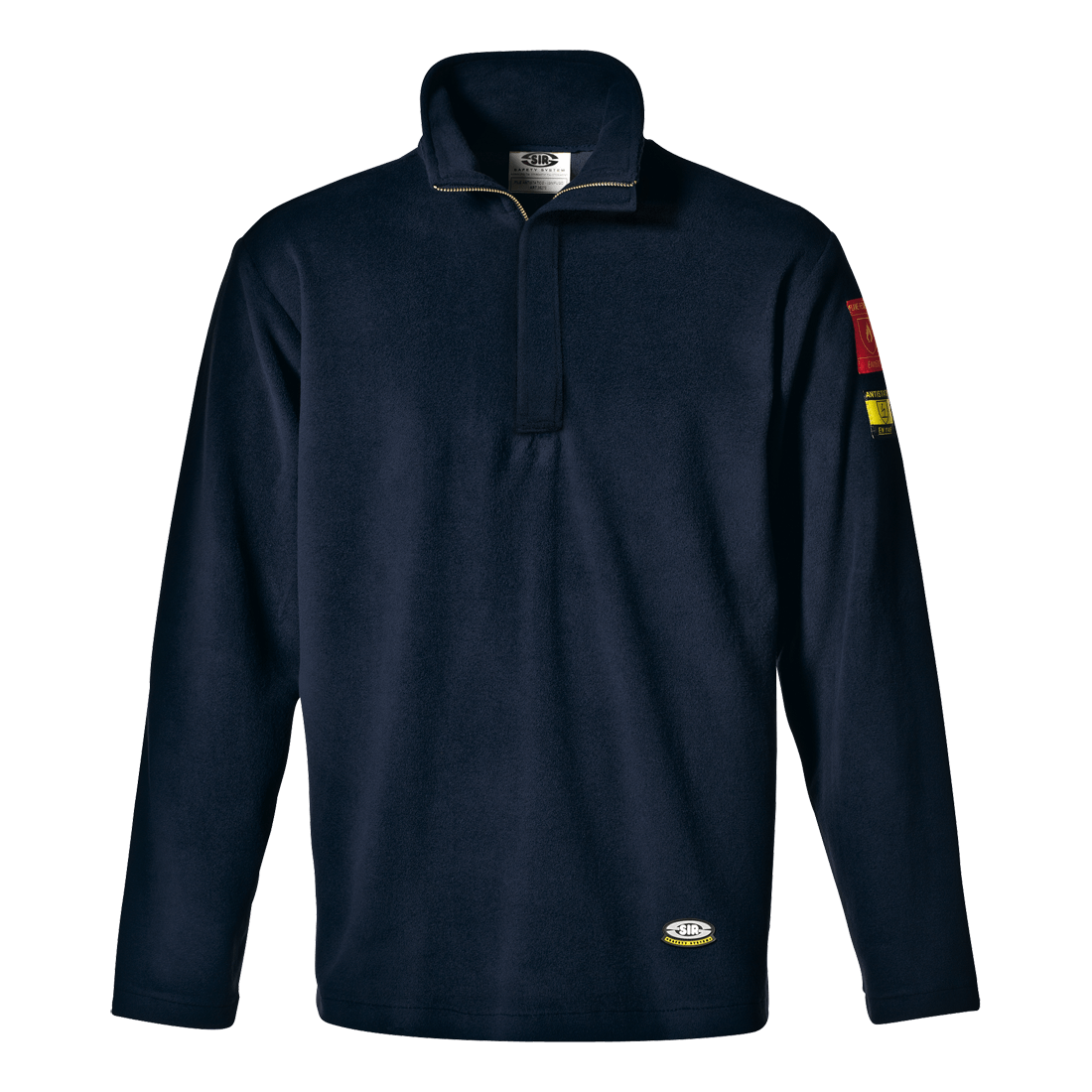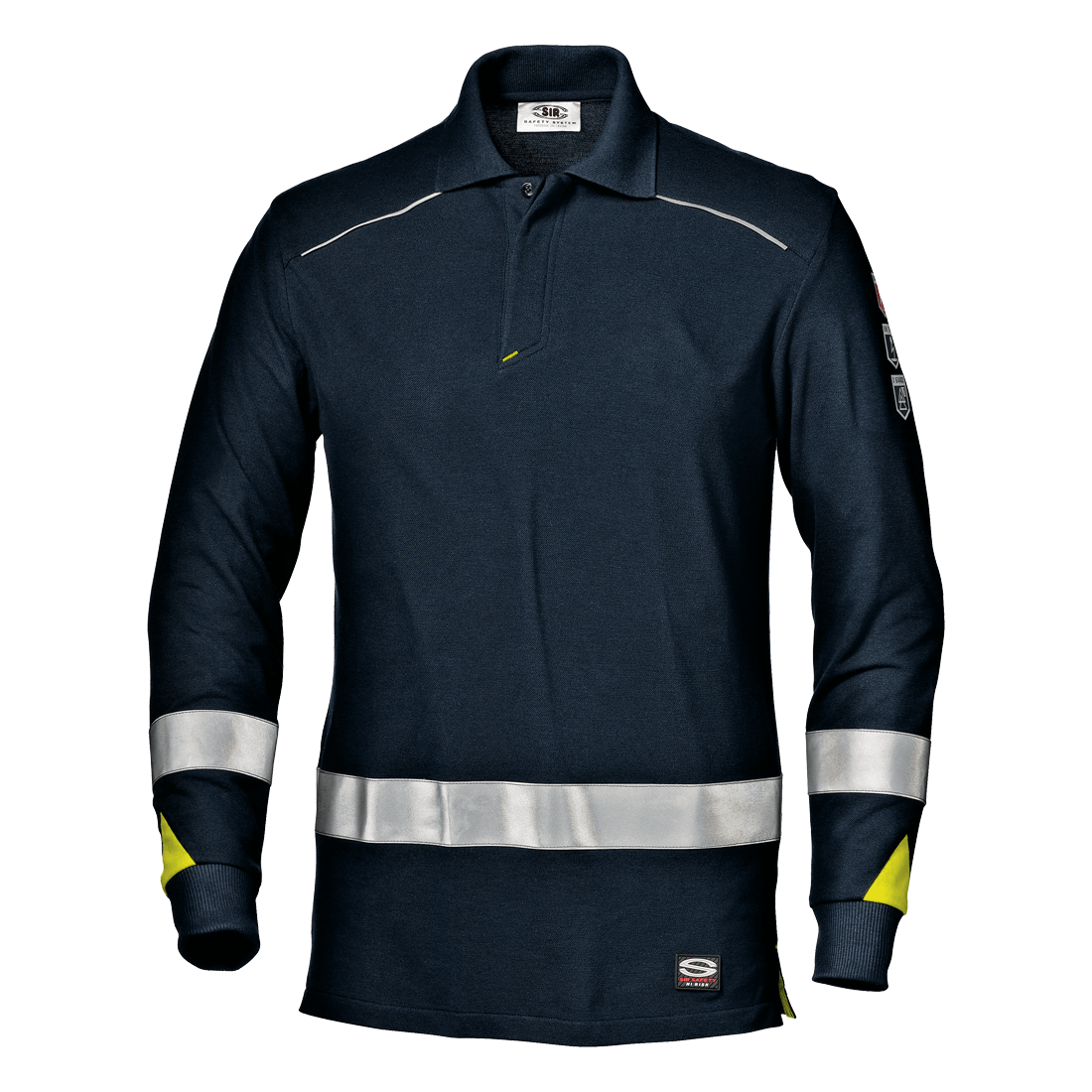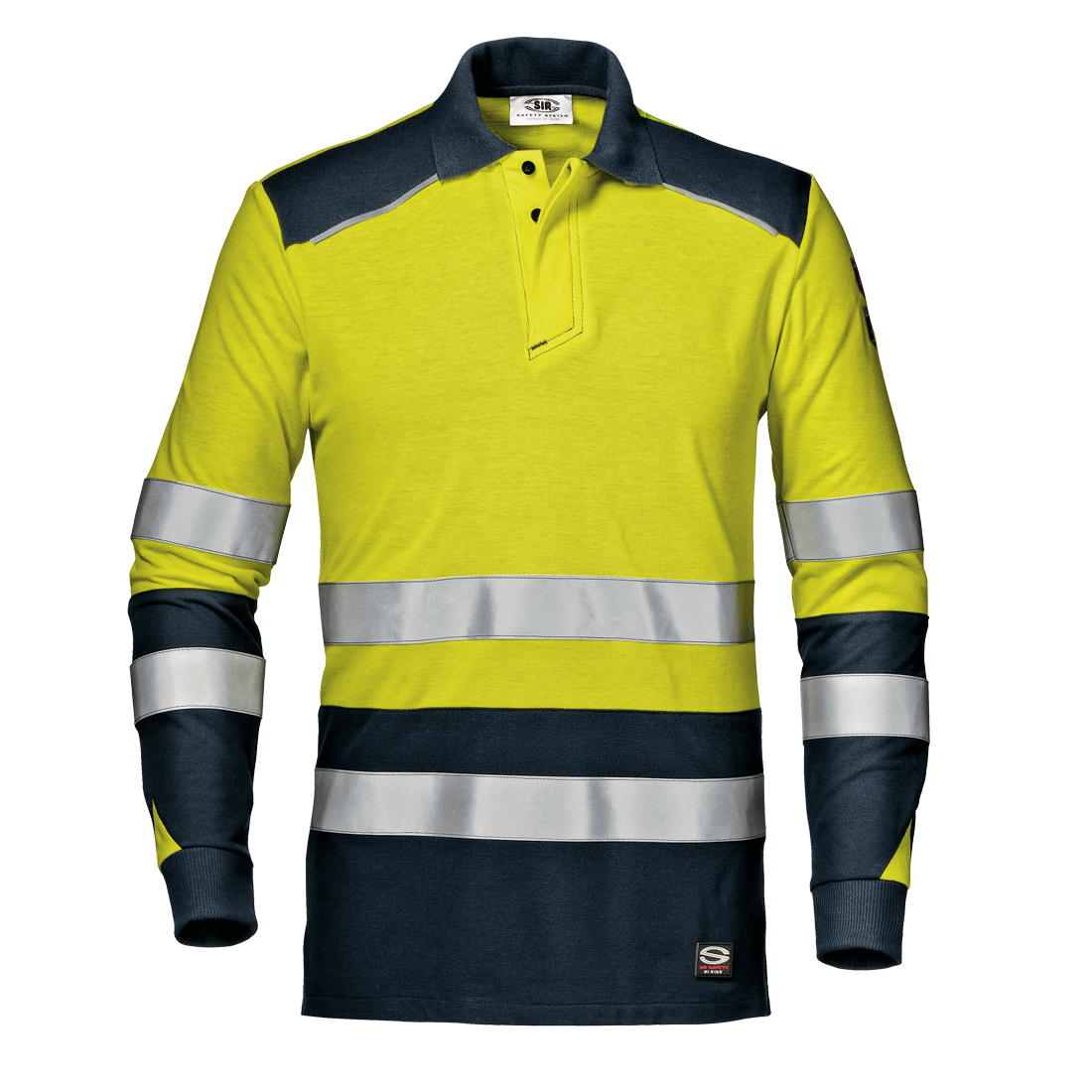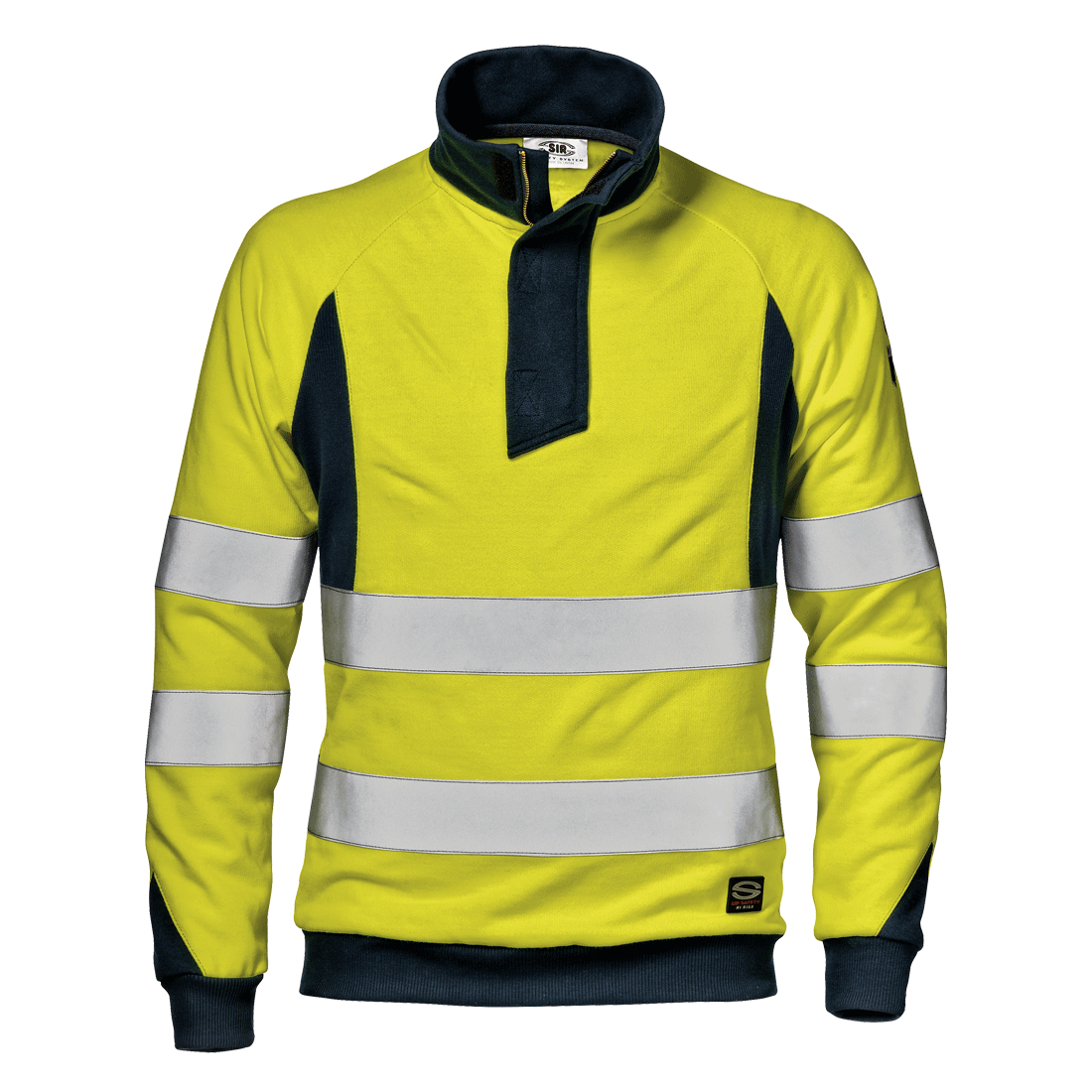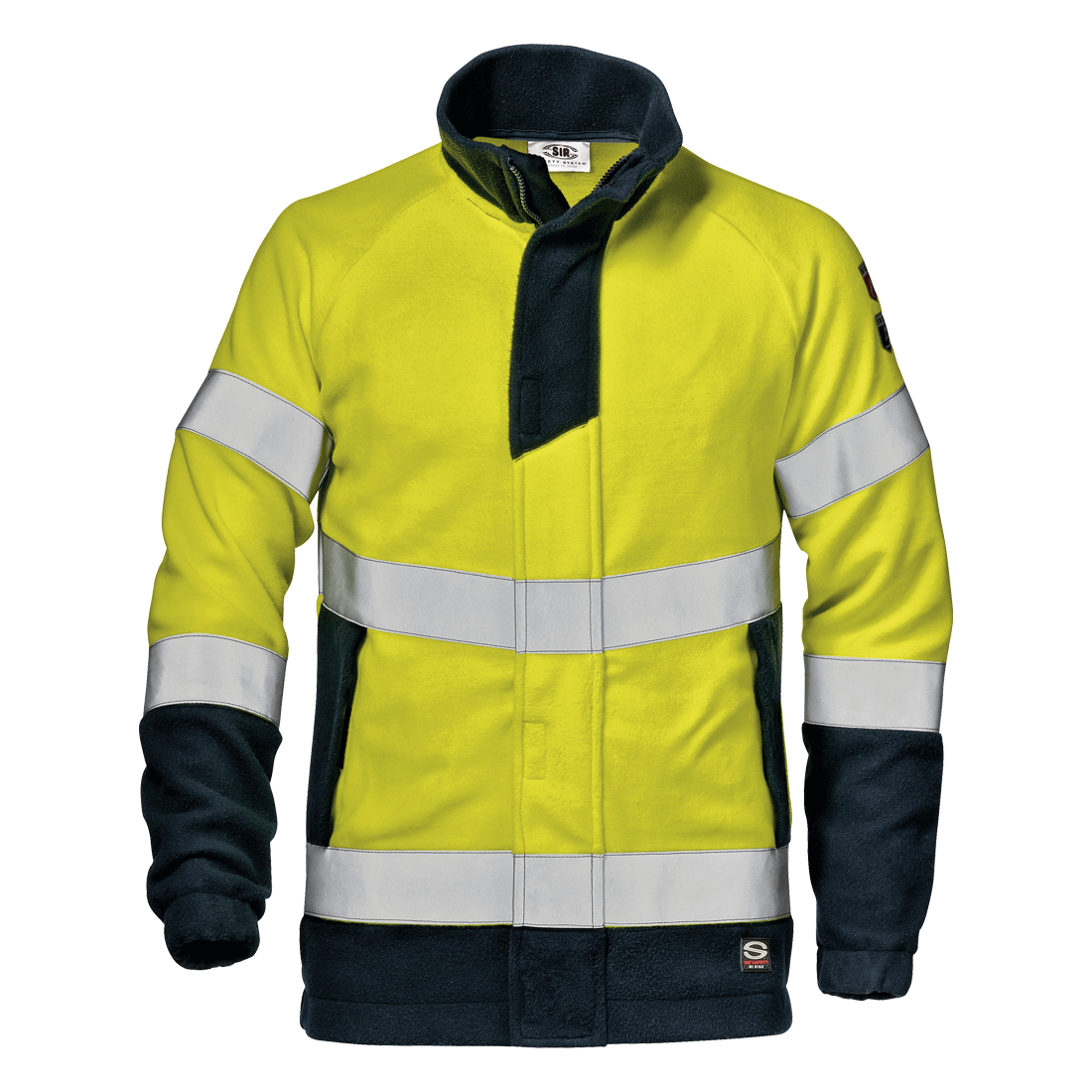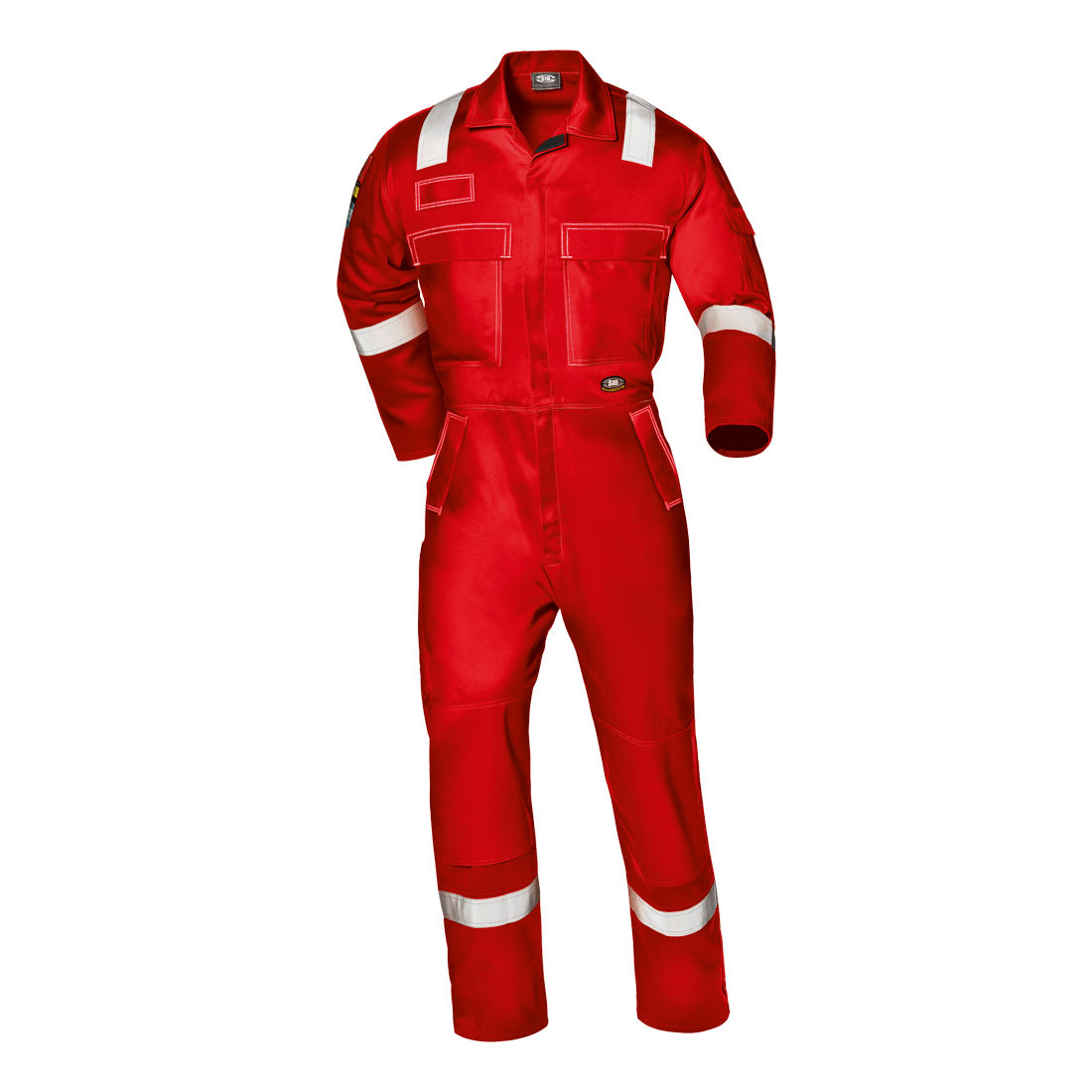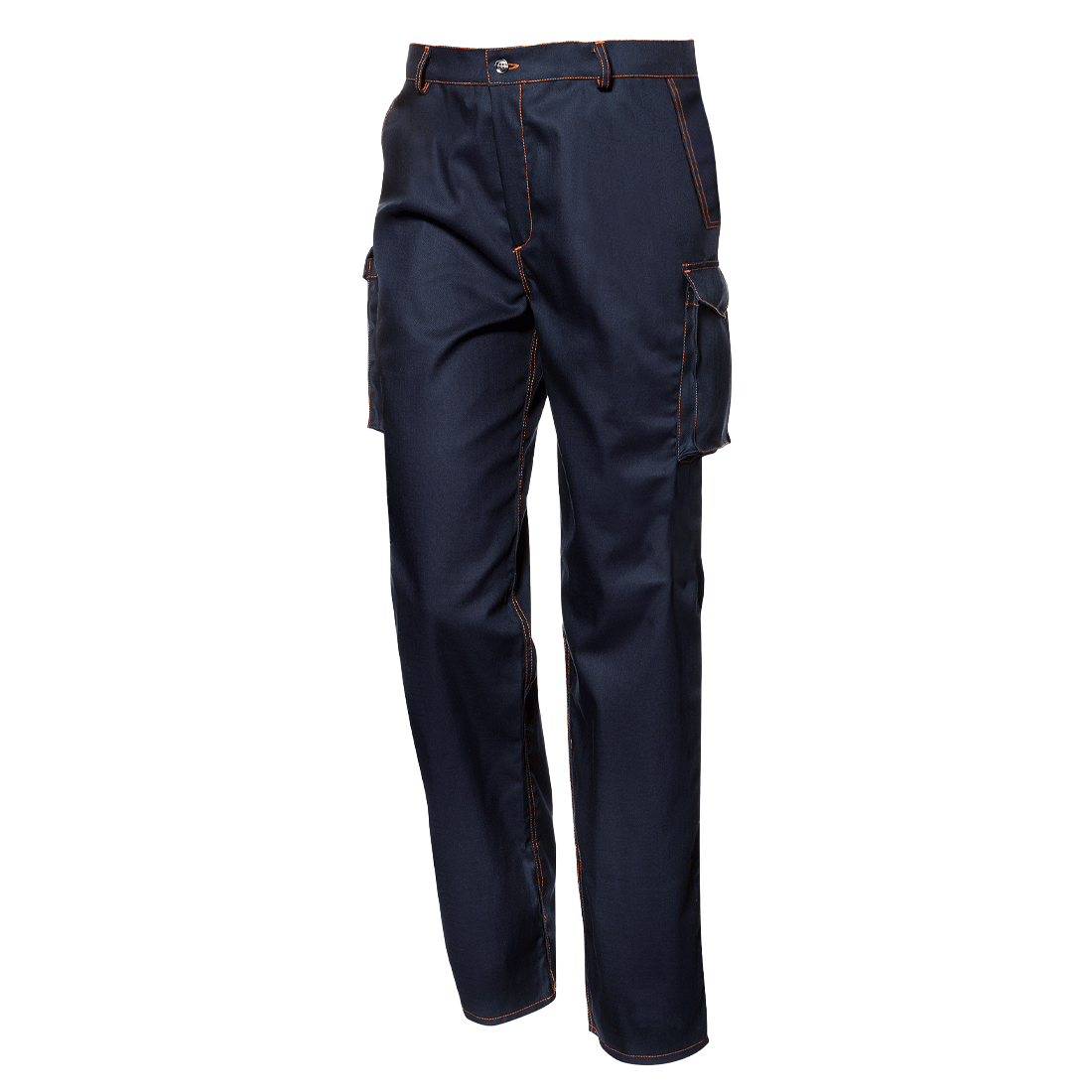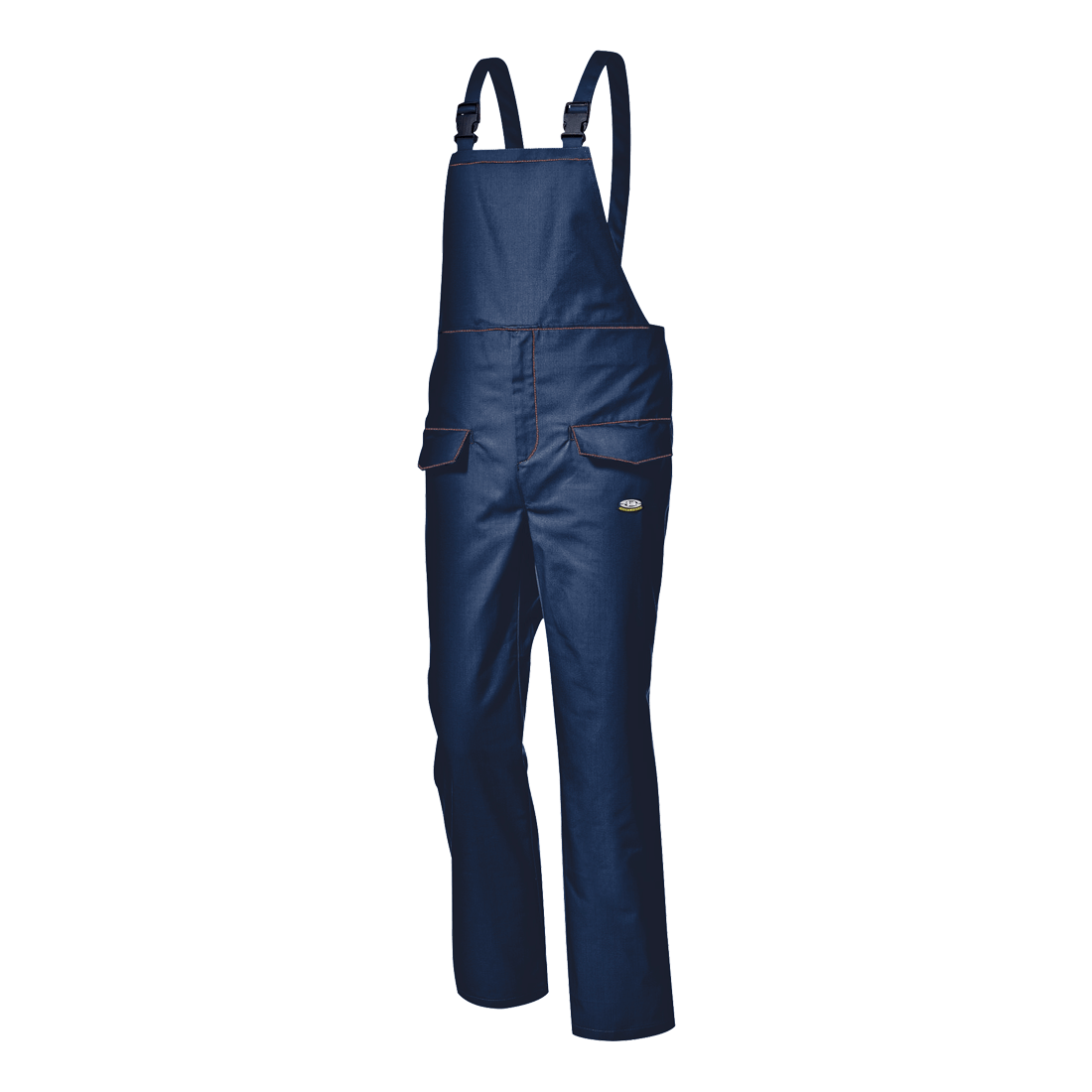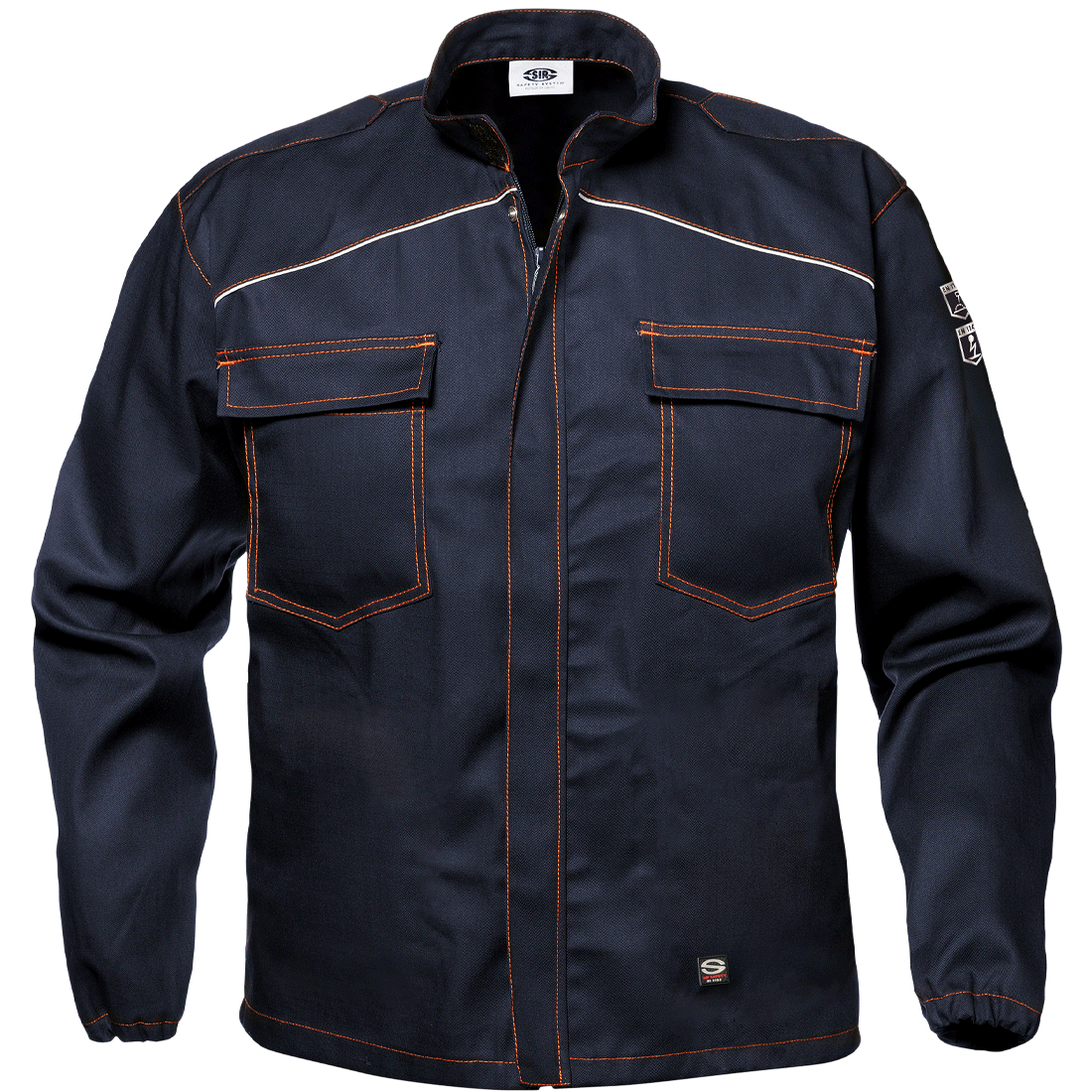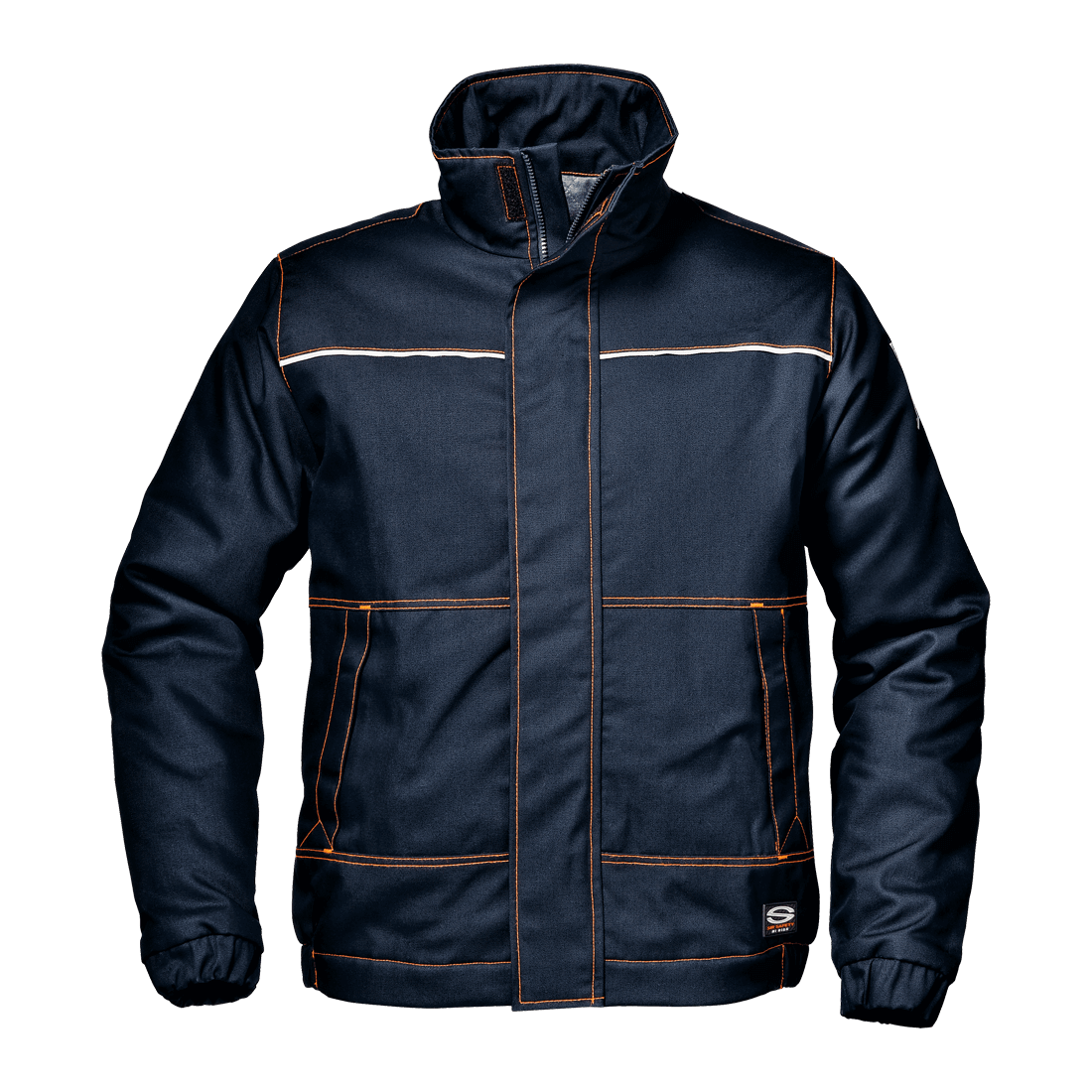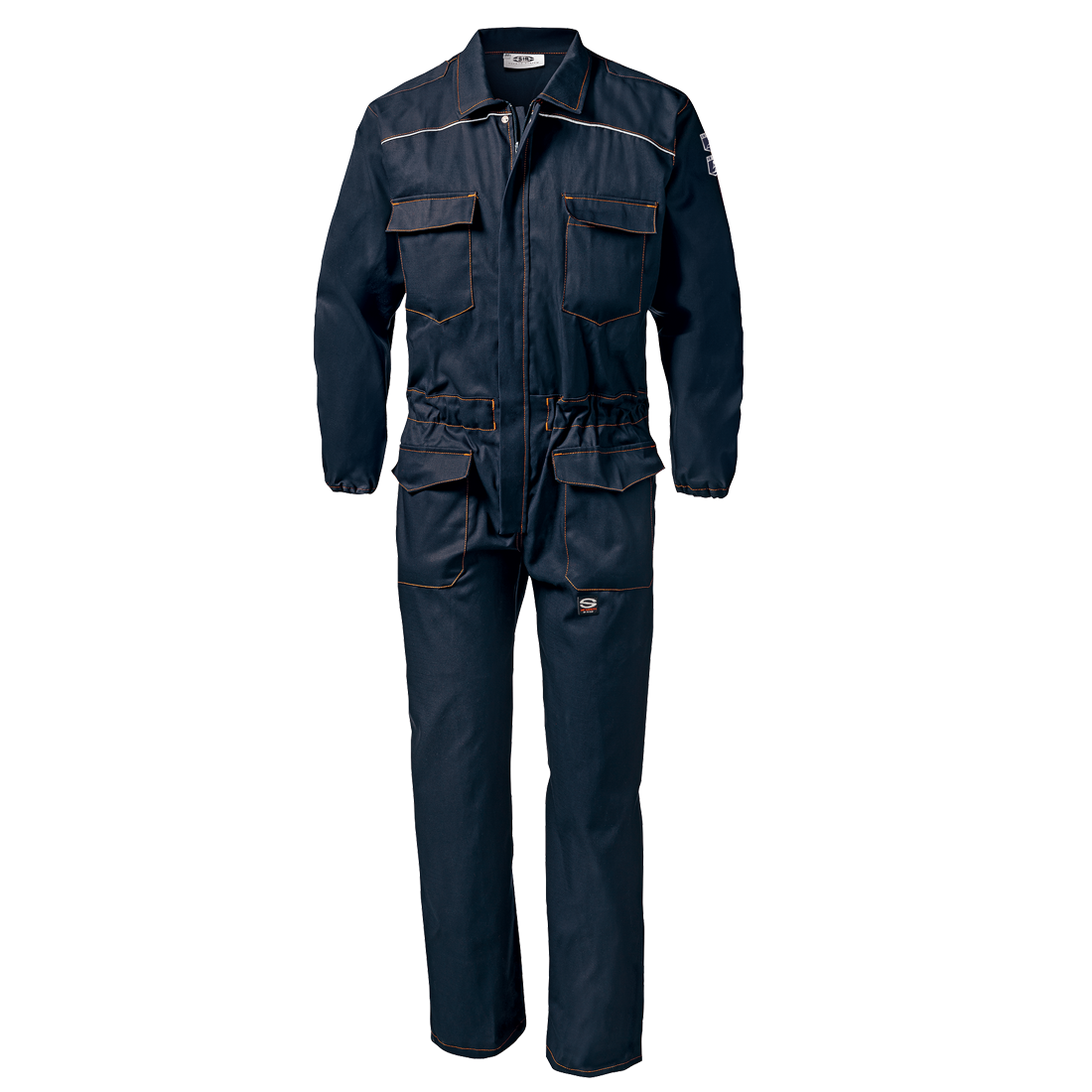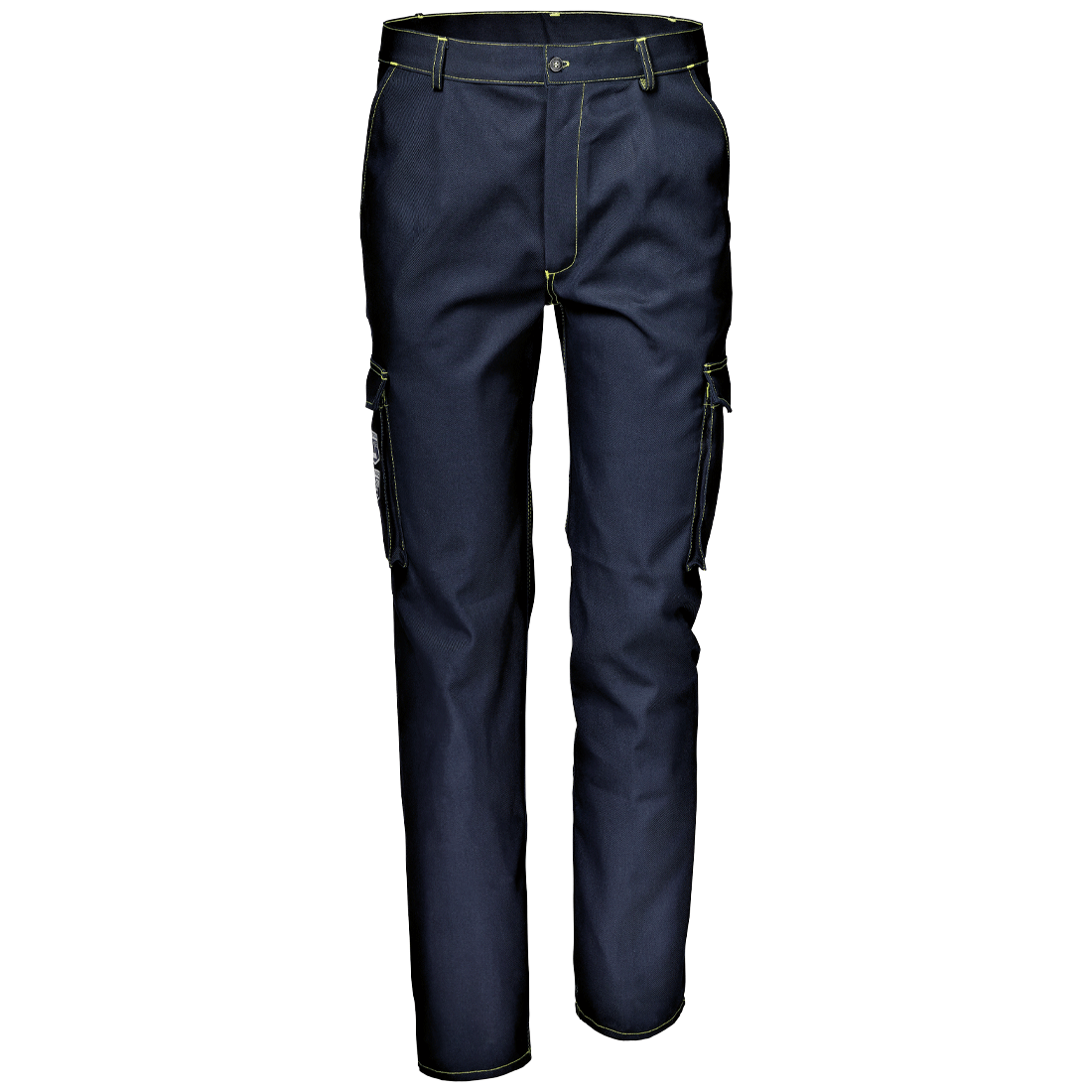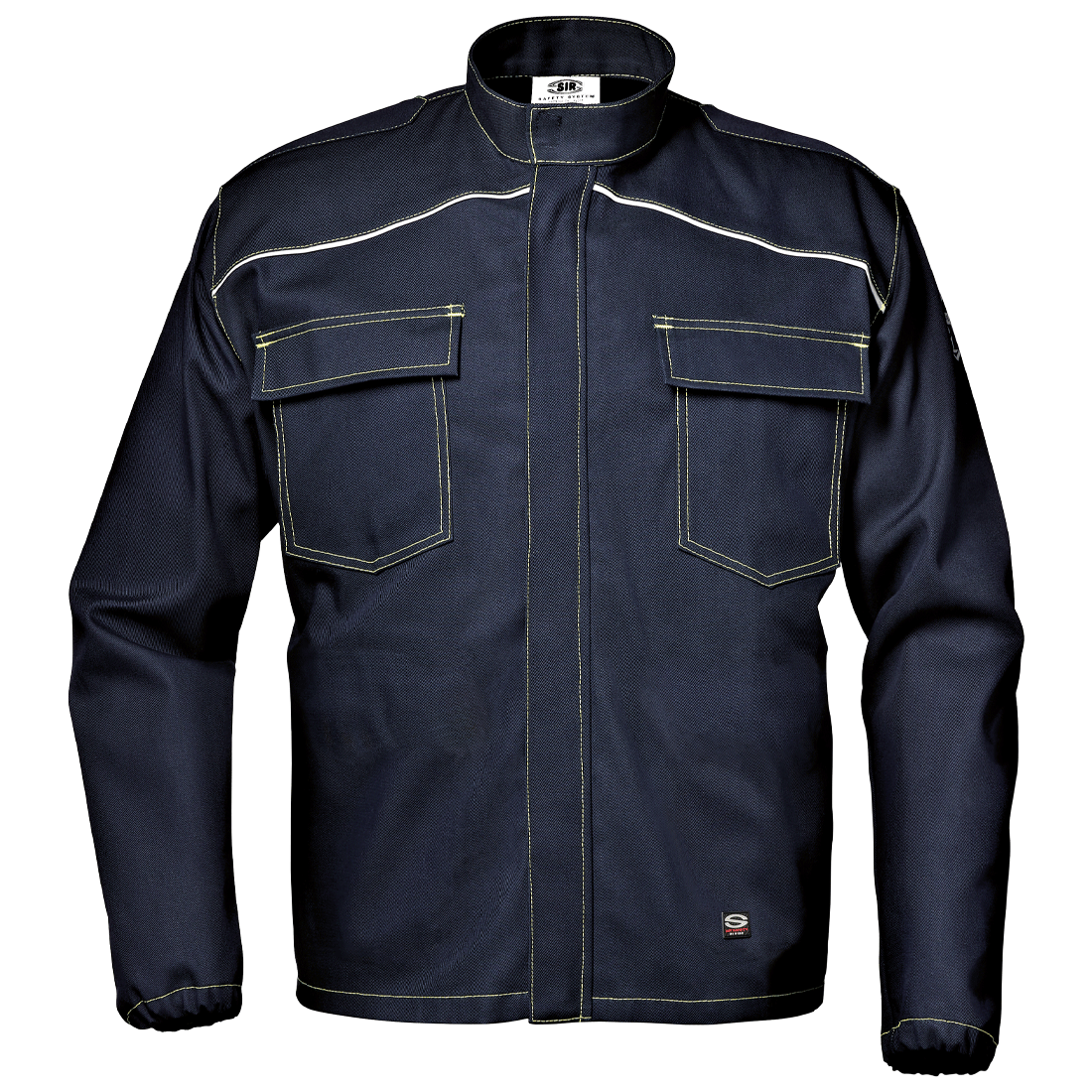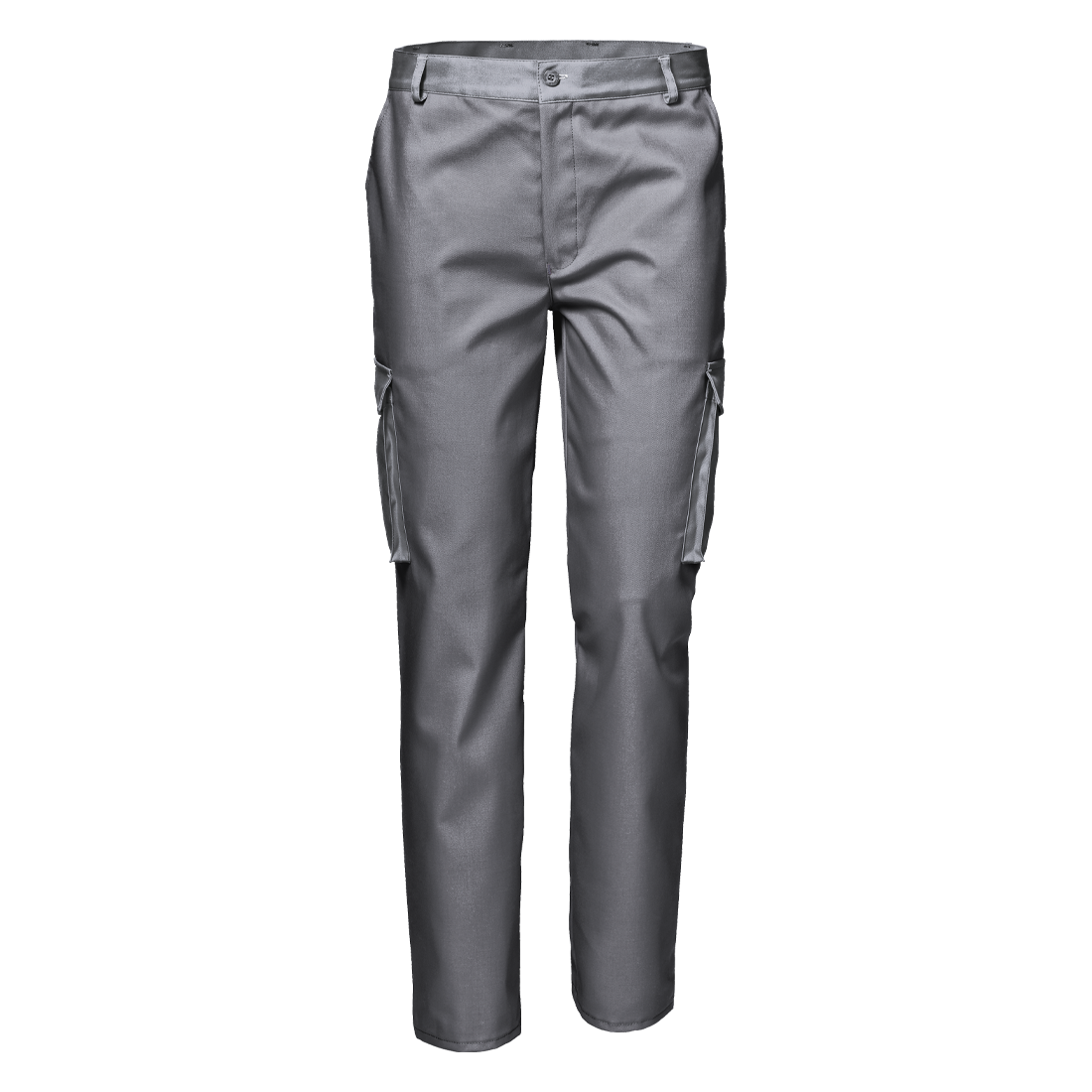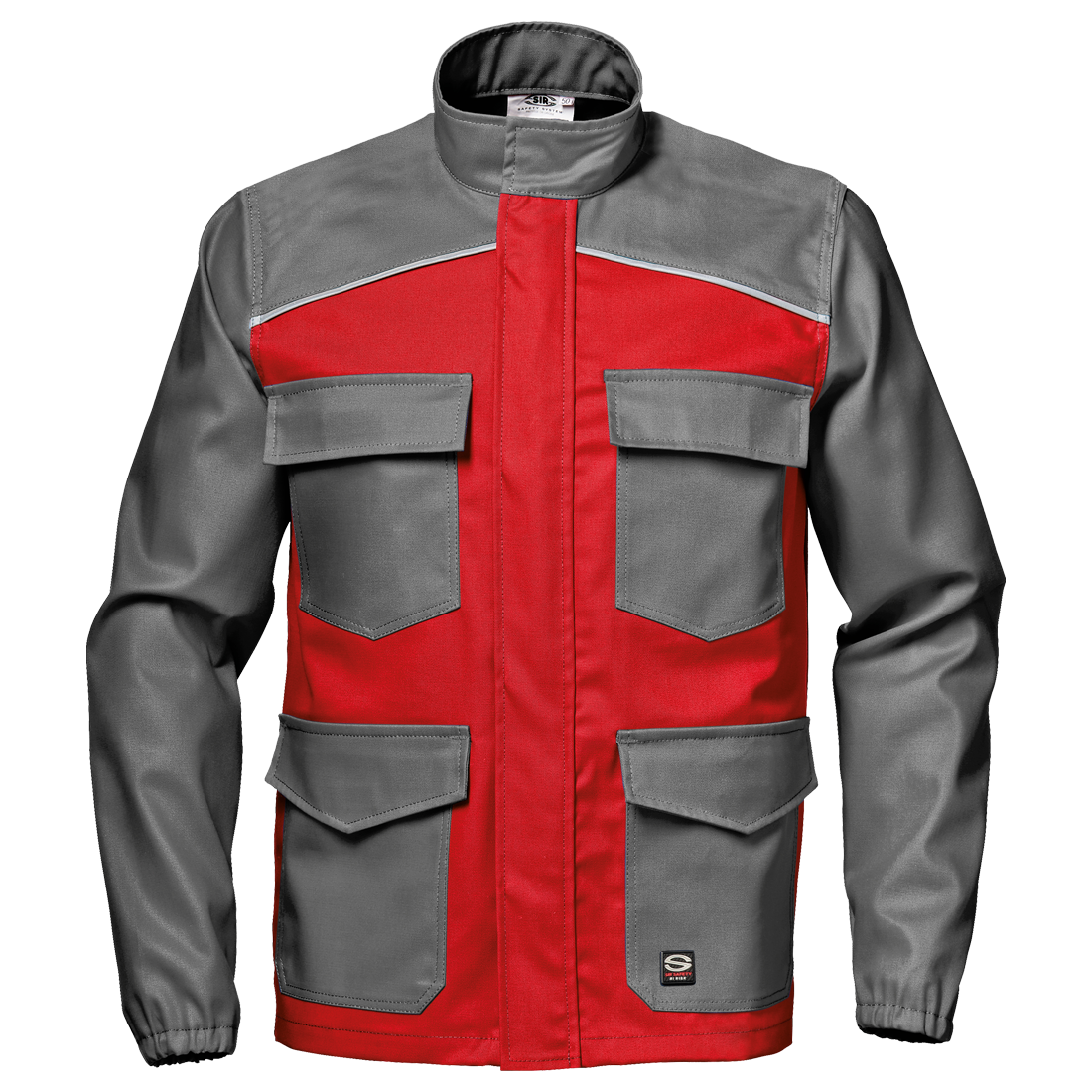
EN 61482-2 specifies the requirements for materials and garments designed to protect workers against the thermal effects of an electric arc.
An electric arc is a high-energy discharge generated by a fault (short circuit) or an incorrect operation on energized equipment. Within fractions of a second, it produces an explosion with extreme temperatures (up to 10,000–20,000°C), open flames, molten metal, and intense radiation.
Please note: these garments protect against the heat and flames generated by the arc flash explosion, not against the passage of electric current through the body (electric shock hazard).
To define the protection level of a garment, two different international test methods are used. Each product may be certified according to one or both methods:
1. Box Test Method (EN IEC 61482-1-2)
This test simulates a direct electric arc in a confined space. The garment is classified according to the APC (Arc Protection Class) parameter:
- APC 1 (formerly Class 1): Protection against an arc generated by a current of 4 kA for a duration of 0.5 seconds.
- APC 2 (formerly Class 2): Protection against an arc generated by a current of 7 kA for a duration of 0.5 seconds (higher protection level).
2. Open Arc Method (EN IEC 61482-1-1)
This method calculates the exact amount of thermal energy (expressed in cal/cm²) that the fabric can withstand before failing or transmitting heat. It provides three key parameters:
- ELIM (Incident Energy Limit): The most stringent and recent safety threshold. It indicates the energy level at which there is a 0% probability of suffering a second-degree burn.
- ATPV (Arc Thermal Performance Value): The energy level at which there is a 50% probability of a second-degree burn occurring through the fabric before the material breaks open.
- EBT (Breakopen Threshold Energy): The energy level at which the material has a 50% probability of physically breaking open or developing holes.
To ensure maximum workplace safety, protective clothing must provide full-body coverage. Jackets and trousers should be complemented by other required PPE, such as arc-rated helmets with certified face shields, insulating gloves, and safety footwear.
Wearing multiple layers of protective clothing significantly increases the operator’s level of protection. For this reason, we always recommend wearing certified flame-resistant undergarments beneath coveralls or outer protective garments.